1844
The Alsatians in 1844 knew the importance of water and used their knowledge to insure that they could survive and thrive in Medina County Texas. They arrived for the promise of land and freedom. They had to survive, build a cabin and farm for 3 years to get title to the 160 acre homestead.
An immediate need was water, and in increasing amounts the more they developed, grew crops, and their families. The immediate technology was surface water in the form of springs and small ponds. They called surface water “the source”, or “die quelle”. These natural springs were running when Henri Castro brought them into Galveston, past the Alamo in San Antonio and ultimately modern day Castroville along the Medina River.
No source of information can be found about the water technology strategies of the Alsatians. Even though the events leading to Texas Statehood are well known, the exact details of survival by homesteaders with respect to water is not. Other more colorful texts about Indians dominate the written record. The author surmises much about the strategy of water. Refurbishing water features on two homesteads is inspiring.
Clearly surface water was the most readily available and easiest to put to use. But the endeavor of building a Cistern was not a task for the first day on the homestead.
Cistern Technology & Strategy
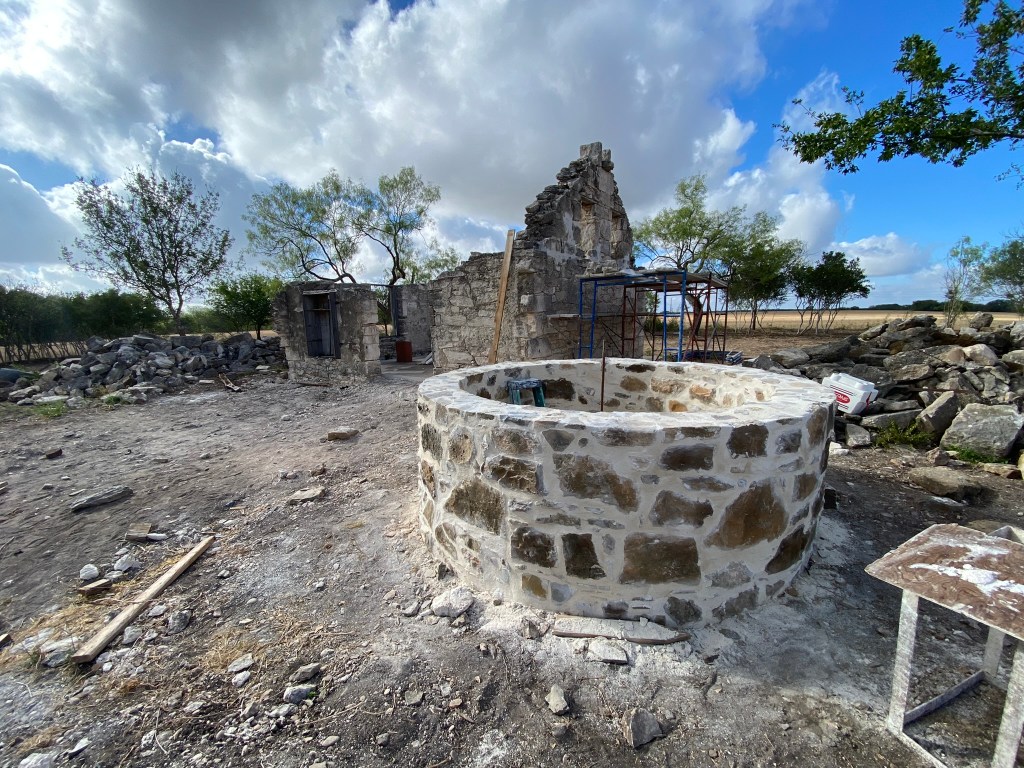
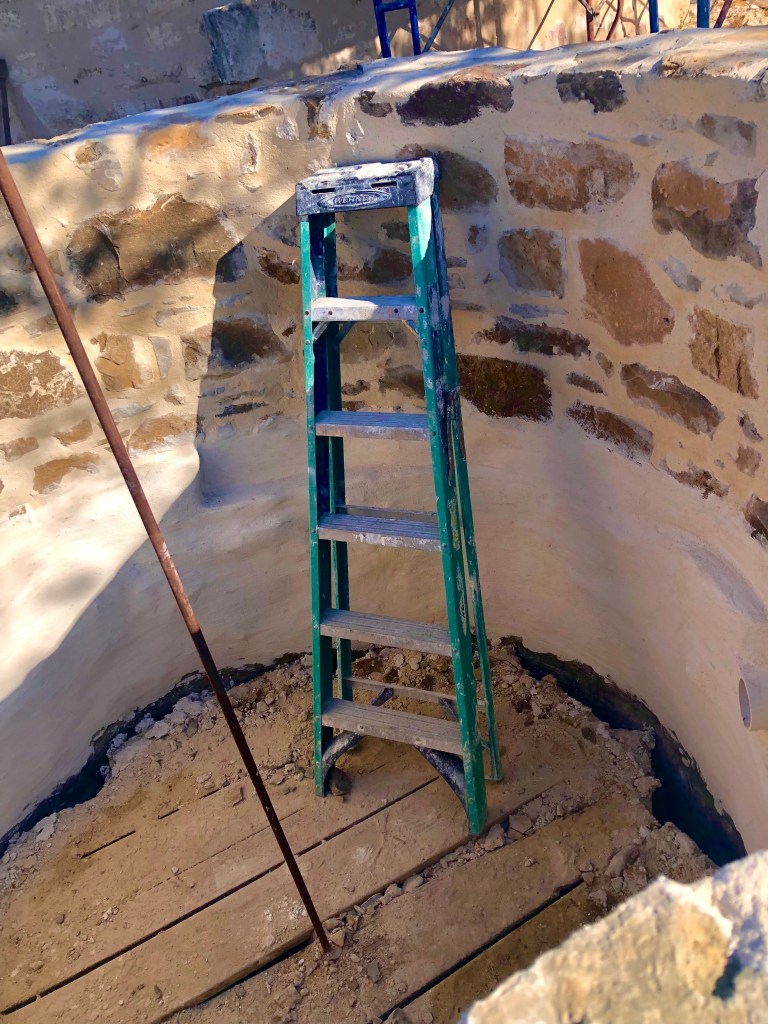
There are many skills required to build a stone, underground Cistern. Masonry skills were needed with great certainty to place the stones. The use of Lime Mortar and possibly clay as a sealant to form the Cistern walls and floor. Once completed the Cistern on our farm is nearly 20 feet deep. Several ladders and equivalent structures to modern-day scaffolding were required to build a deep tank. Add woodworking skills to the list. All of the fasteners we have found in existing structures were either round wooden pegs from carpenter’s or square nails made by a blacksmith.
Getting the water to surface once finished also required a pulley system and ropes. These structures were either built on top of the well walls or around the walls to enable a bucket to be lowered and water lifted. It was likely a continuation of the system used during construction for dirt removal, stone and mortar delivery.
Stone homes, and skilled masons existed, and probably hardware and fasteners could be found in San Antonio. But these skills had to be allocated between housing, water works and the likelihood that the venture would succeed. It is known that the typical 4-room Alsatian stone homes were often built one room at a time and likely one room per year. Even this progression is not well documented. Family growth probably dictated the housing needs more than anything. Where the Cistern fits into the timing is not well known for our homestead, usually you are lucky to have a dated cornerstone on a home.
Cistern Construction
But when it became time to build it, the task was not a small one. Here are some numbers for us to work with from our Cistern.
Above Ground Wall
16″ thick limestone walls-large blocks, 42″ tall, 96″ inside diameter
Below Ground
0 – 2′ deep 16″ thick limestone walls – large and medium blocks.
2 – 10′ deep 12-16″ thick walls – medium and smaller blocks, Inlet piping typically included at this elevation.
10-20′ deep 10-12″ thick walls – smaller blocks
The diameter of the cistern is fairly consistent with the surface diameter regardless of depth.
Maximum Practical Volume (Water level available 18′)
6,700 Gallons -or- 25,600 Liters
Dirt Removal
128″ Diameter, 20′ deep, expansion factor 1.20
2,145 cubic feet -or- 79 cubic yards
Construction Time Estimate- Manual – 3 people
Above Ground Wall – 3 days
Digging – 3″ per day (about 1 yard per day of dirt removal) 80-days
Rocking – 6″ per day 40- days
Lining – 4′ per day 5 days
Overall 128 days
Does not include time to quarry stone, transport slurry materials, removal of dirt and cuttings from the site. The homestead had many other chores, and this was just one of them.
The results
Today the average family household uses 300 gallons per day. But without all of our modern conveniences allowing so many luxurious water uses, a rural Alsatian family might get by on much less, say 50 or 100 gallons per day. That is a lot of bucket hoisting from the Cistern and still possibly high. The Cistern would last over 120 days without rain for the minimum use case. A pretty good safety net.
The average F-150 pickup can only carry 1/2 yard of material. It would take 160 truck loads to remove the uncompacted dirt from the construction.
 ALSATIAN Homestead