The Latitude of Alcase is atbout 48° and the elevation above seal level around 450′, while the Homestead is much further south at about 29° with an elevation of about 1,000′. Naturally Alcase is cooler than Castroville overall, but not by much. To our architectural point, snow falls in Alcase and steep roofs are a common feature to avoid snow buildup. The roofline, and useful space within an Alsatian vaulted cieling go together. Partial lofts and storage spaces were part of the plan.
In order to obtain 640 acres of land in Texas by Homestead, a family needed to live on the land for 3 years, bulid a cabin and farm at least 15 acres. There are many reasons to immigrate from Alcase, but Texas was a difficult and hostile land. The homestead probably started with a more temporary log cabin as it could be erected quickly and start the clock. But the more permanent stone homes were expensive and laborious, many were built one room at a time. A reasonable decision to build a more permanent structure after the Homestead was granted.
The building materials of choice in Medina County Texas were Cypress from the banks of the Medina River, Limestone and Caliche from various quarries, and whatever hardware could be purchased in San Antonio, or made by a blacksmith. The hand hewn beams were attached without nailes by skillful joinery. Square and round joint assemblies abound. The thick walls stone walls were also placed with tremendous effort, yet aligned to a clean planar surface. Doors and windows had cypress lintels so stones could be placed and wall construction could continue skyward.

There are many interesting features of these homes, but the multiple steep roof pitches would clearly not be required in a land without snow. This elevation view of the Huegele home built in 1852 shows three pitches, with room inside for a small and modest loft. High pitch roofs are very recoginizable once you know why they were constructed. It is the characteristic Alsatian roofline morphology.
The light the gable windows add is complimentary and can be opened or closed with shutters. And the playful loft space provided for new children. It was familiar, comfortable, possible and very functional.
A closer looks shows the wall contains a fireplace inside the home and the flue passes up the wall between the two gable windows.
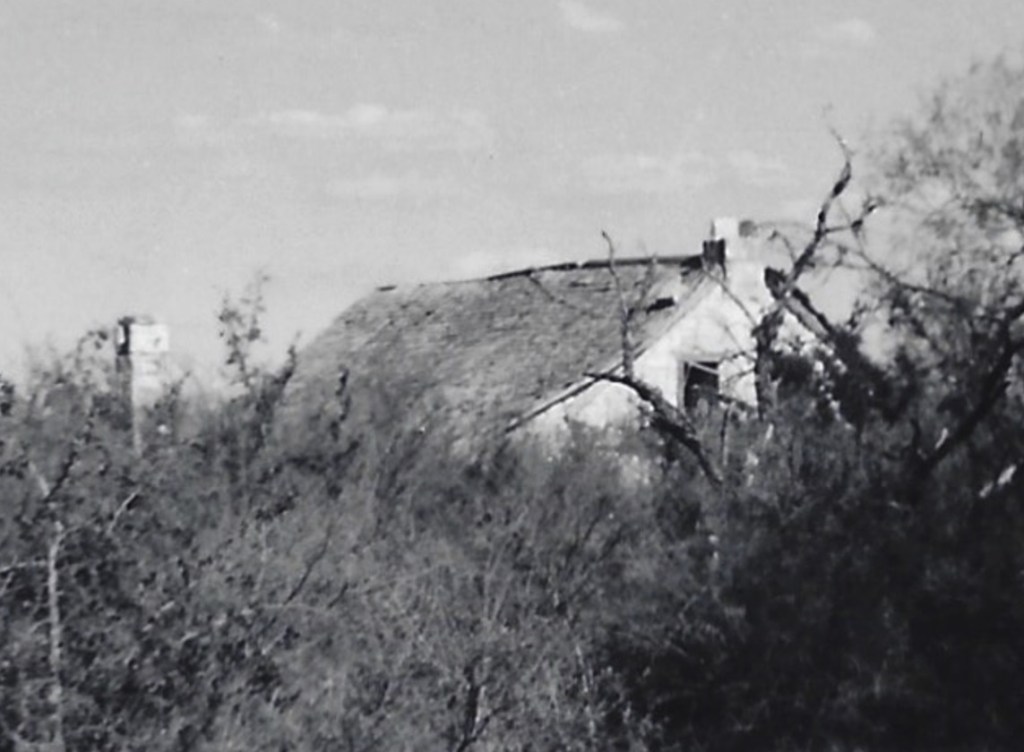
The homestead documents clearly show that Huegele met the requirements and recieved land, but this could have been accomplished with a log cabin. This home was known by locals in 1963 as “The old App house”. They are the second owners in the chain of title and apparently built, added-on and essentially made this their home. Clearly the stone homes endured way past the log cabins and were the preferred living spaces for Alsatians as no other home was ever built on this property. As you can see, the house was not inhabited in 1963 and had been empty for some time. As parcels of land were combined, purchased and sold, it was combined with the neighboring parcel that contains the Rohrbach home.
The doorways are short. Unless later modified, be prepared to bump your head on doorways and porches. The front porch is also an extension of the home into the outdoors. A place to take off muddy boots and dirty farm clothes. Imagine the conversations that have occured on these porches, so far from home in one way looking back, yet the future was in front of them watching growing fields and grazing livestock on land they owned. The past met the present with a view of the future on those large shaded porches.
 ALSATIAN Homestead