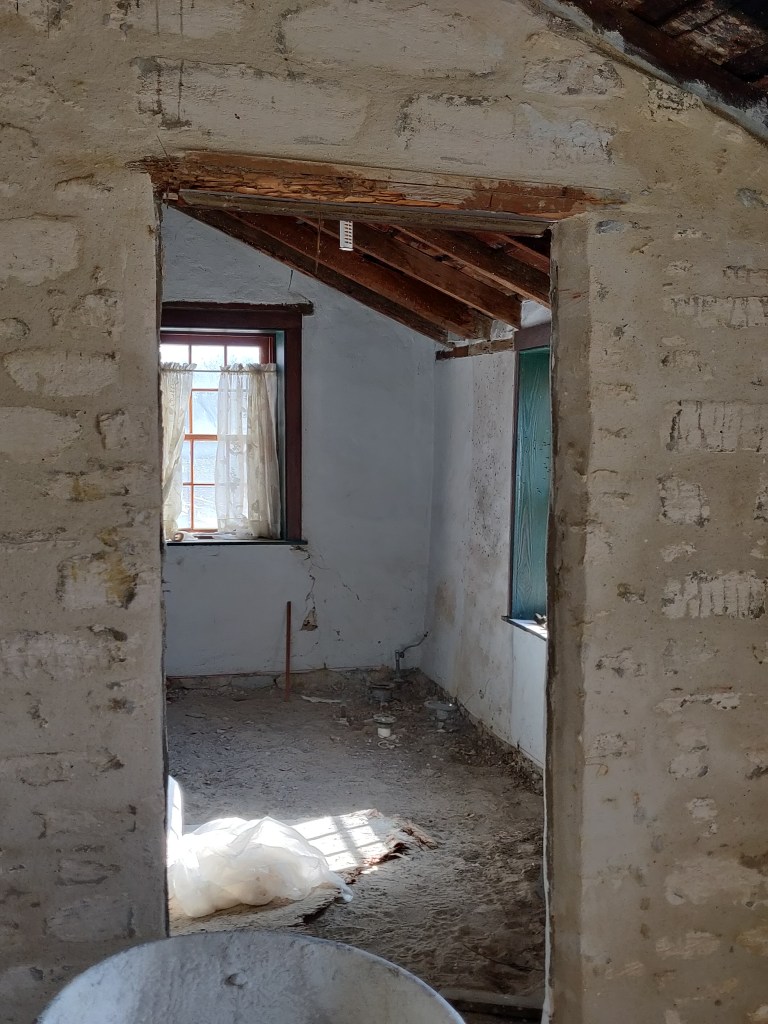
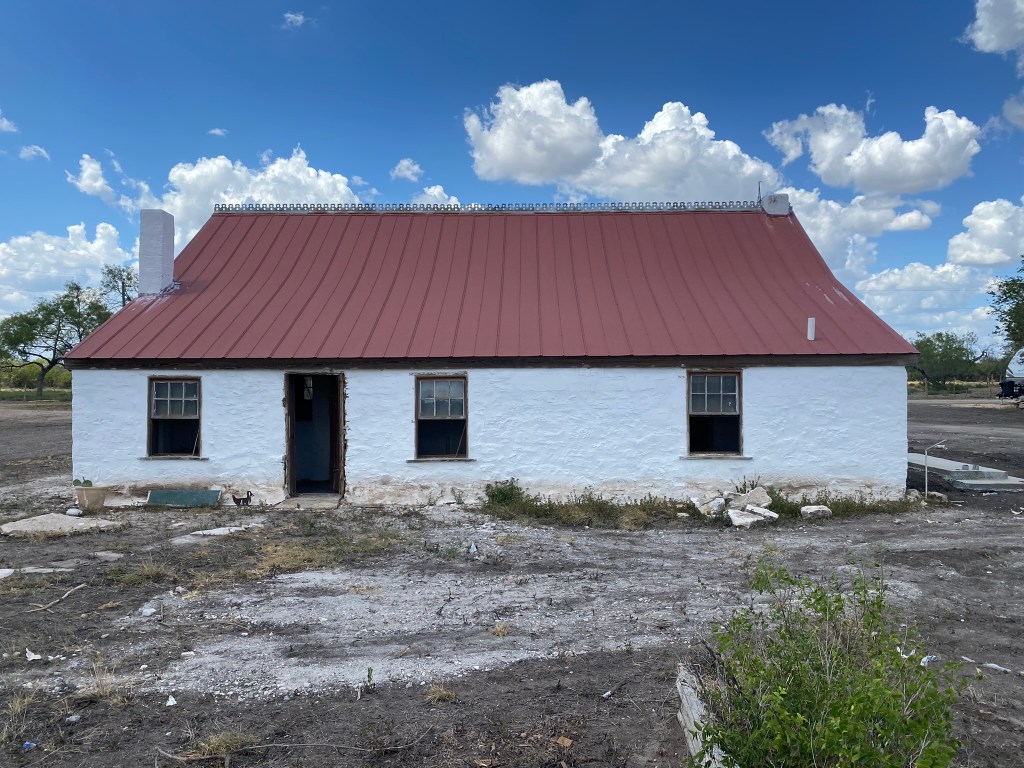
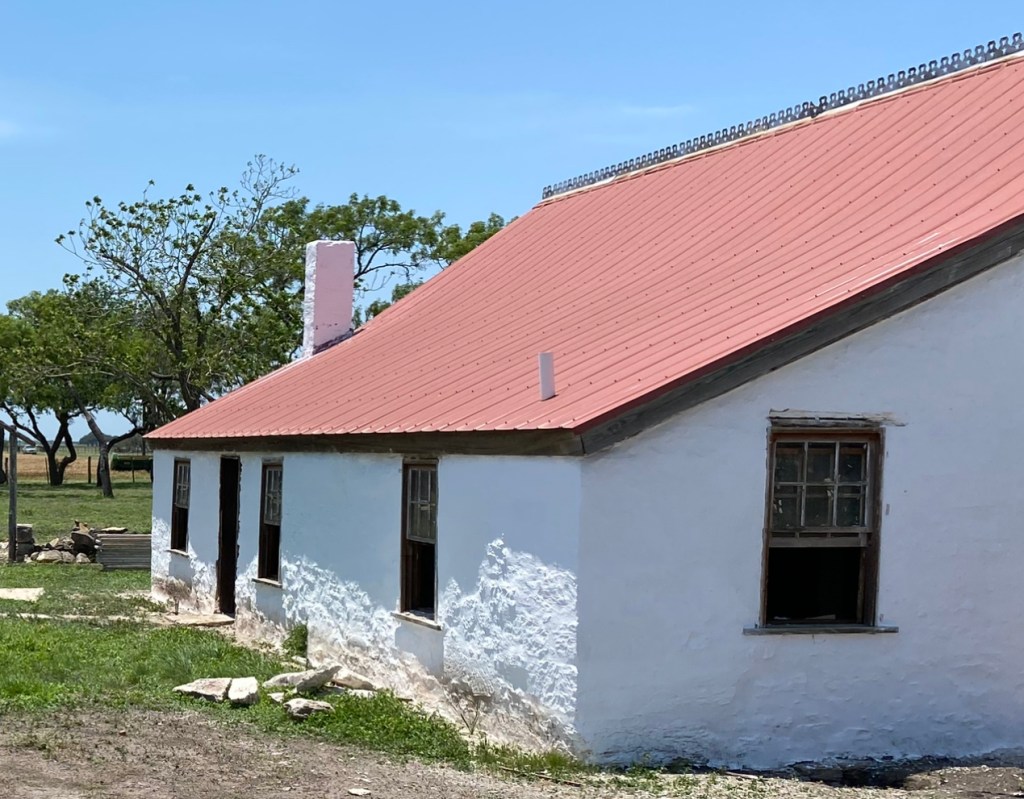
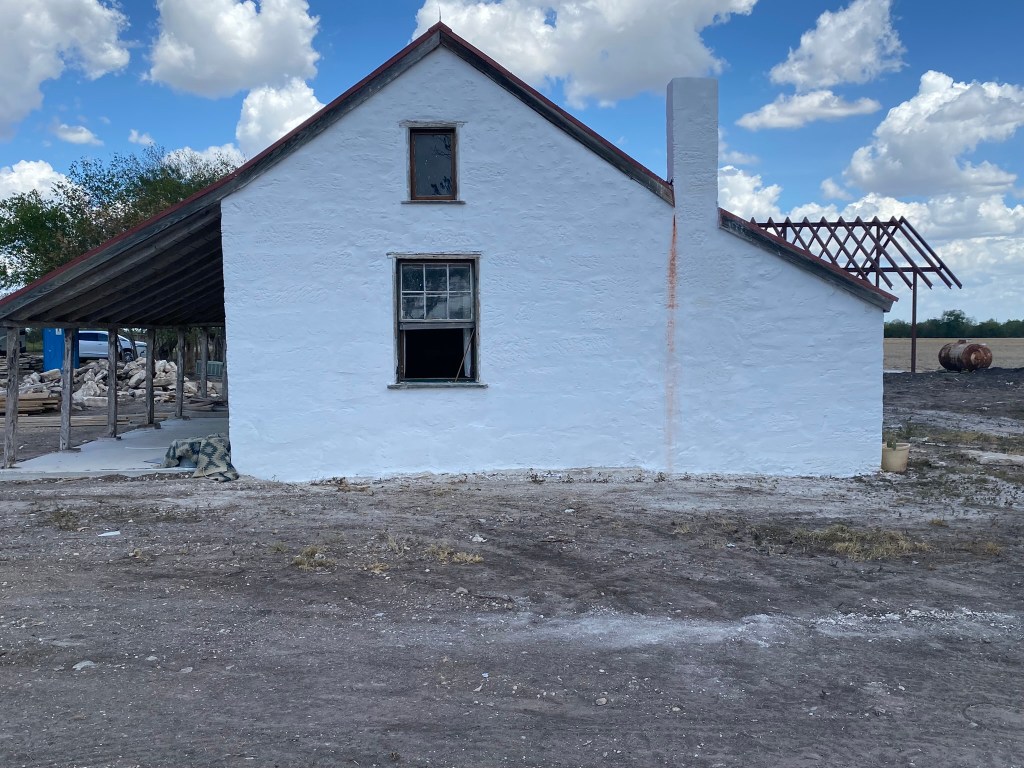
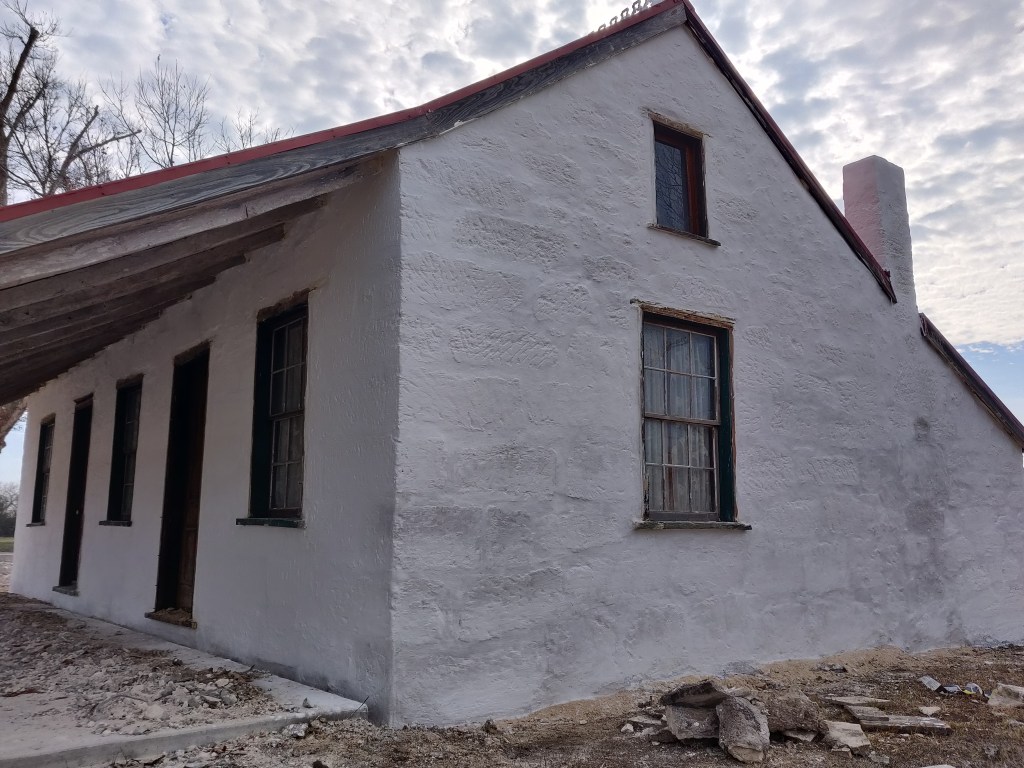
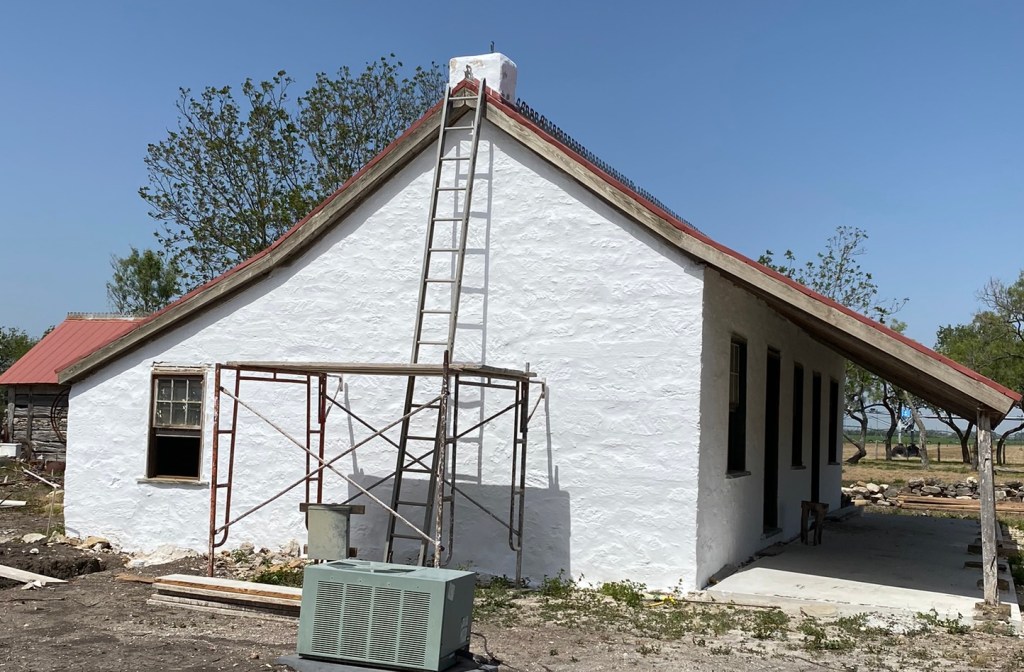
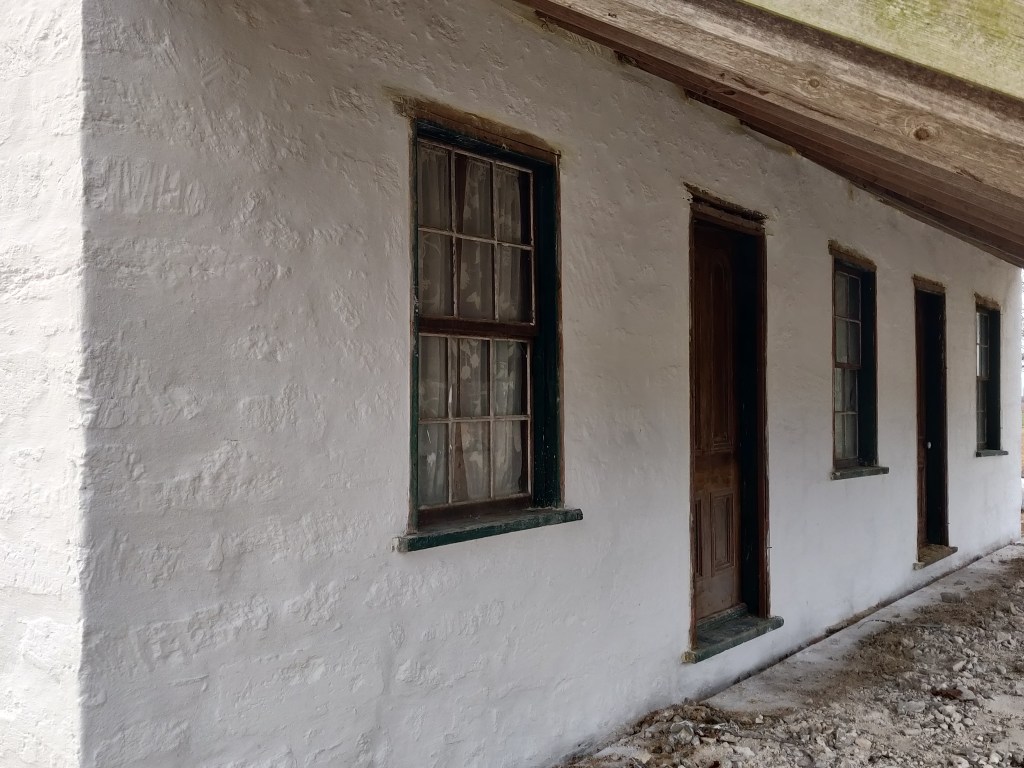
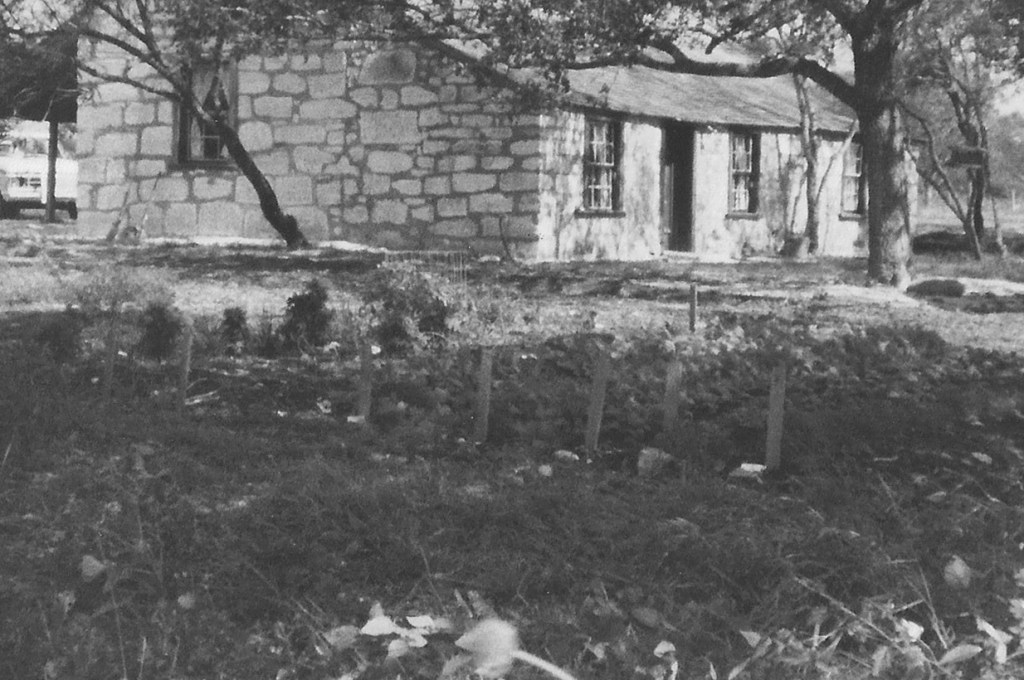
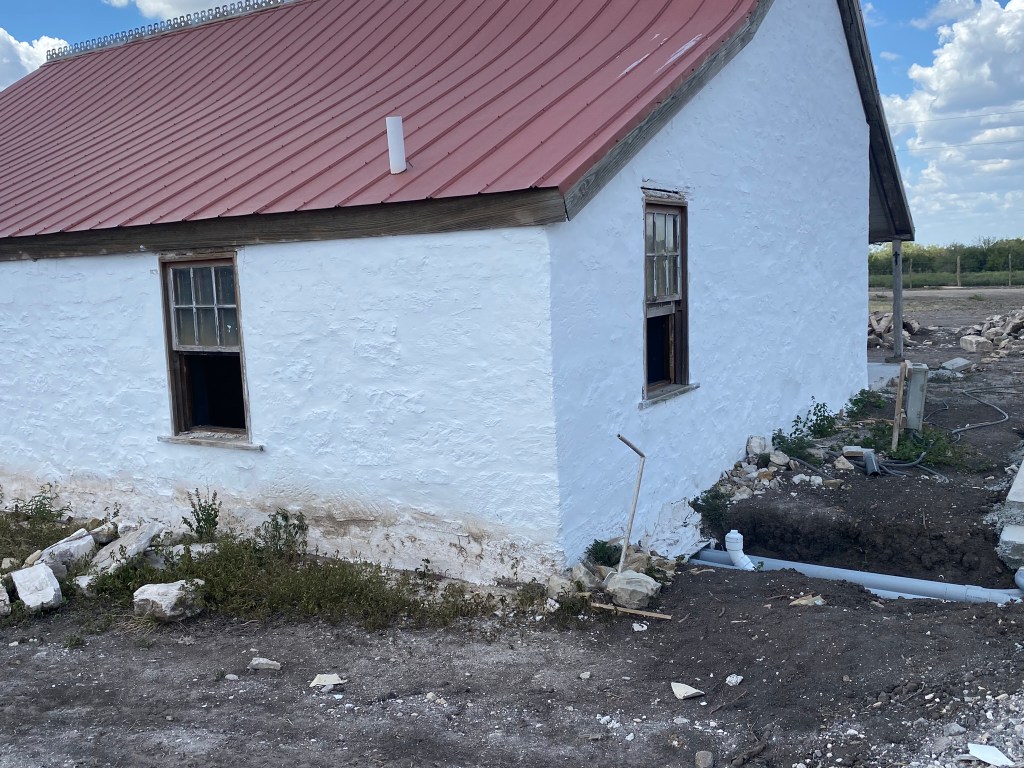
The Rohrbach House is located northwest of Castroville, in Medina County Texas. Building at least a Log Cabin was a homestead requirement. And it appears that DOM Rohrbach did that and more. His original homestead has the quarry used to make his eventual 4-room home he built in about 1852.
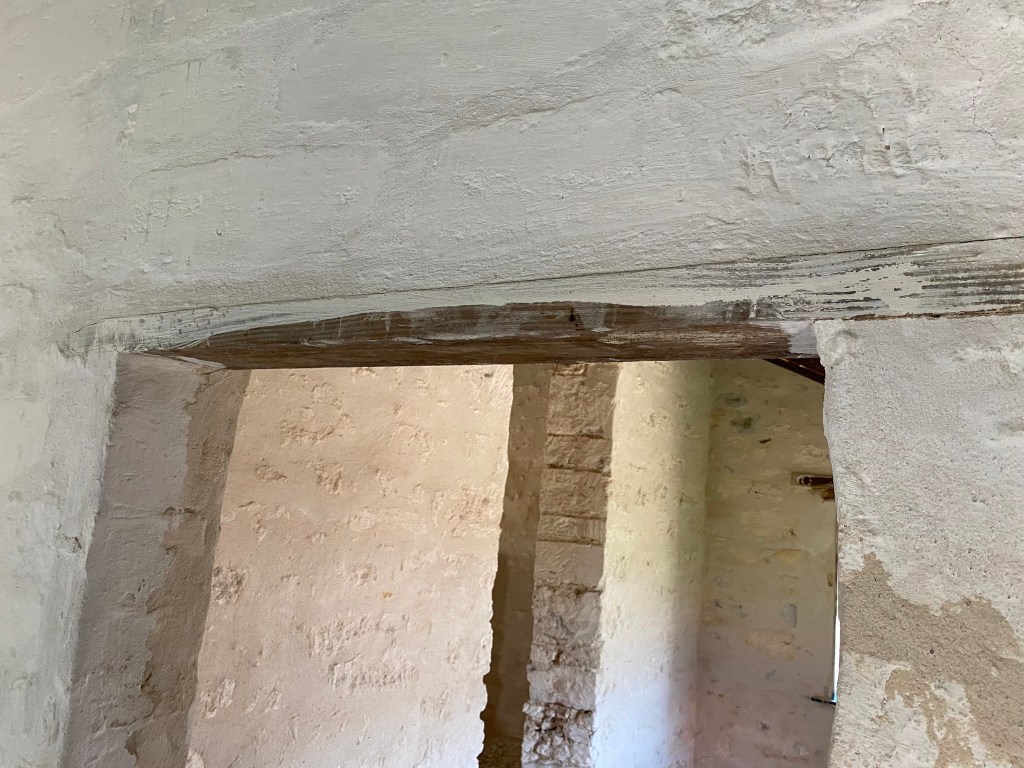
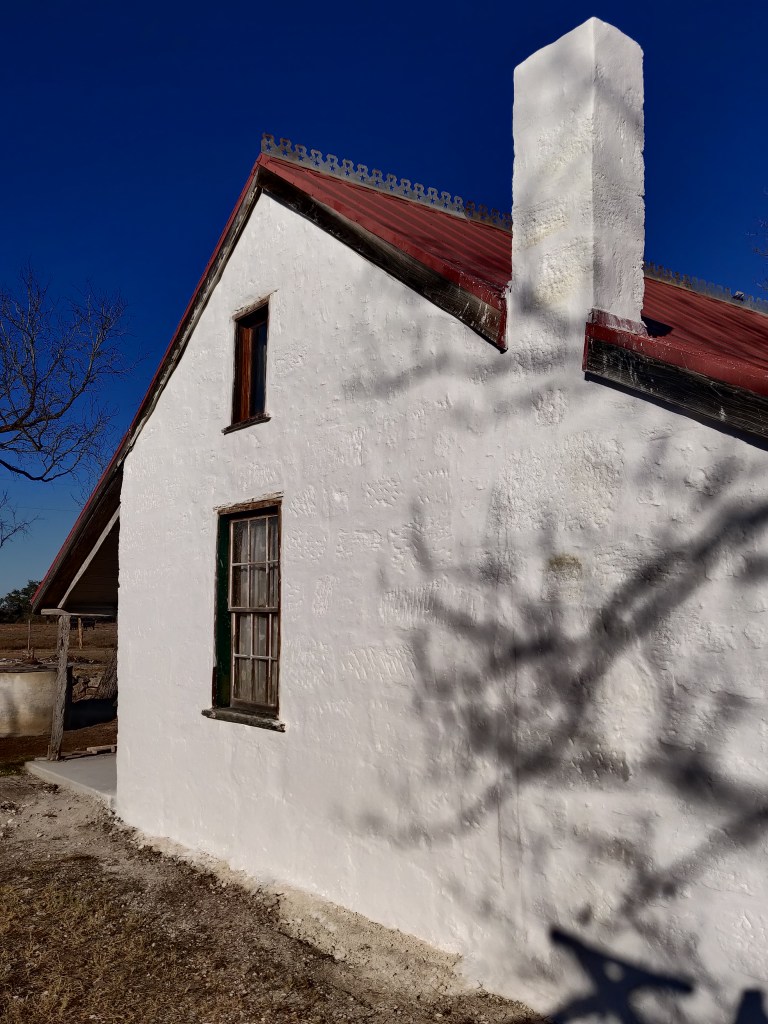
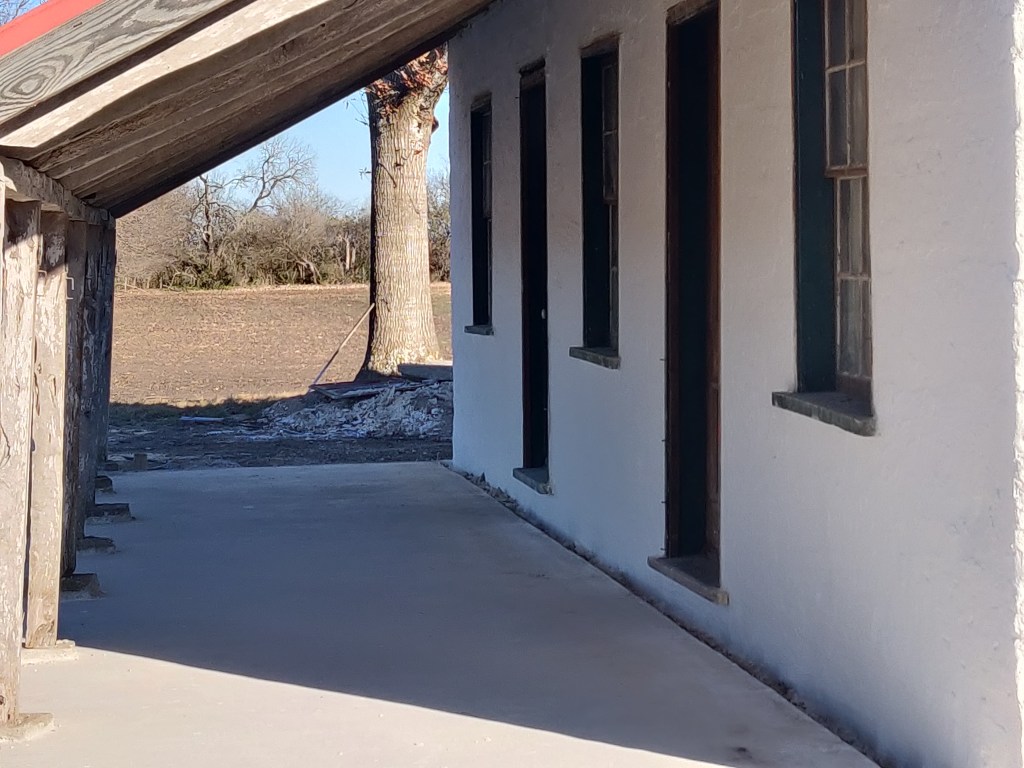
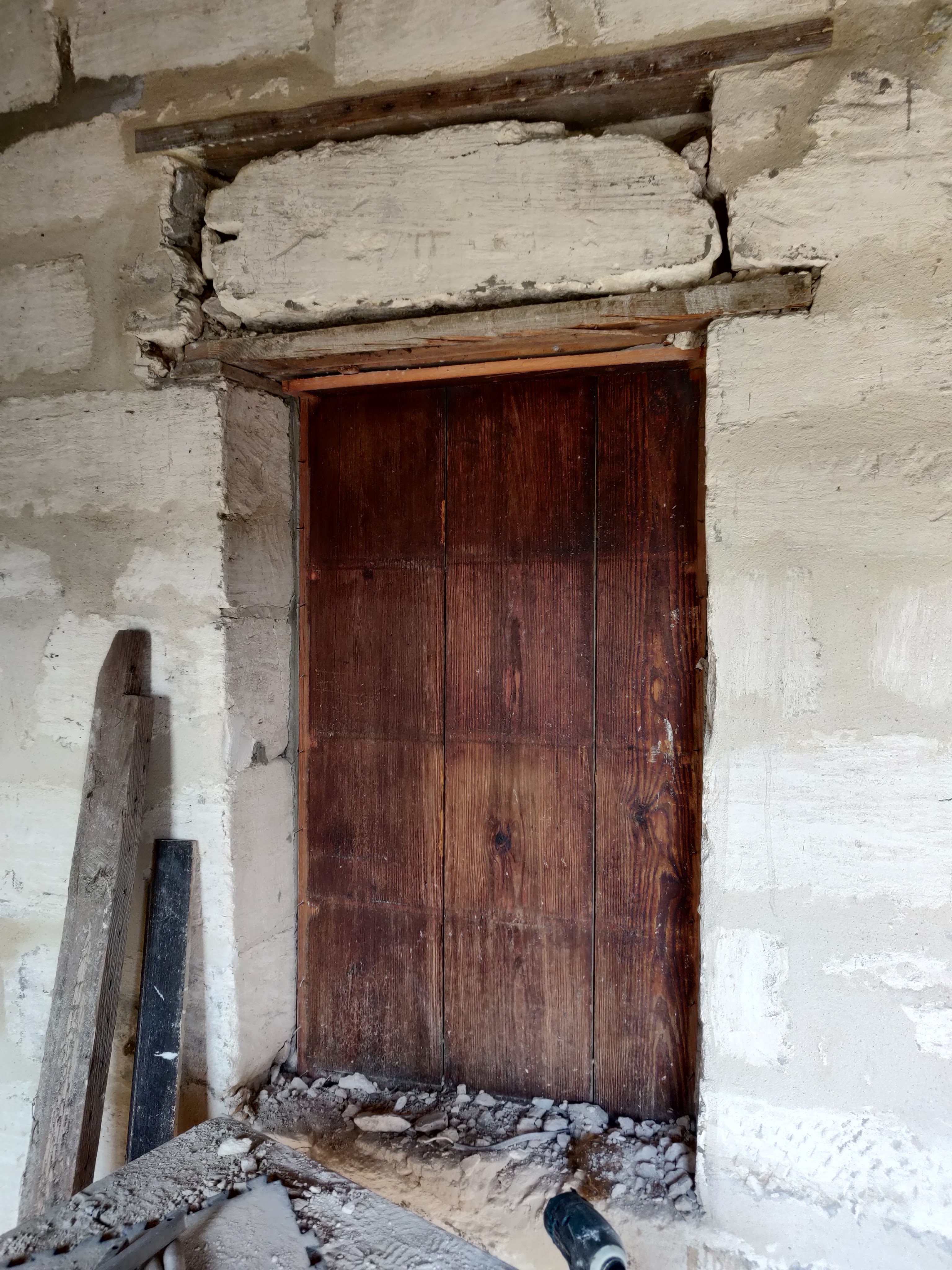
It is likely the home was built a room at a time, giving a building an exact date when on or two rooms were built each year is difficult. Markings on the building stones show the progression of building. They were “read” by the stone mason Baltazar Espinosa. Logically the first room had a fireplace and a small front porch. A high pitch roofline was for the snow… that rarely occurred in Texas, but was the seasonal norm in Alcase. The vaulted area and a few boards made for a very flexible use of the whole home volume. The next room extended the first and was a larger room Larger stones as well. Confidence had grown that the homestead would work out to make such a large investment in time and materials. The last rooms were the southerly and included another fireplace.
Here is a virtual tour of the recent 2019-current restoration effort highlighting the architecture of a stone building.
When someone asks “Hey, when are you going to be done”, you have just spotted someone that has never done a historic restoration project. I usually reply that a better question would be “Hey, can you tell me about the surprises you found in your old house?”
In the fall of 1852 four Frenchmen arrived in frontier San Antonio in the newly formed State of Texas. They were brothers of the Catholic Society of Mary and their mission was to build a new school. John Baptist Laignoux, Nicholas Koenix, Xavier Mauclerc and Andrew Edel commenced with a limestone building approximately 60 by 80 feet on College street in what is now downtown San Antonio along the Riverwalk. The original name of the school was St. Mary’s Institute. Shortly after on March 1, 1853 the bells tolled and school started.
The origin of the builders, the scale of the building and it’s historic nature are all interesting as they are occuring at the same time as the Alsatian Homesteads spearheaded by Henri Castro in nearby Castroville west of San Antonio.
In December 1854, two more joined the faculty and one in particular Brother Charles Francis ended up with the title of The Great Builder. He devoted the next 54 years of his life to the construction of the European style complex. Fueled by cornbread and riverwater as their main water source. Milk, cheese and butter came from the Brothers Livestock housed at the nearby Mission Concepcion.
The timing, scale and duration of Brother Francis work makes one wonder if the stone masons, and other workers were known to the Alsatian immigrants. Certainly there was a shared religious connection.
Of note are other large limestone buildings such as the St. Dominic Church in D’Hanis Texas where construction began in 1853, and then the St. Louis Catholic Church in Castroville from 1868-1870. Both are within the 54 year construction window of St. Mary’s which was completed in 1875 as the largest building complex in San Antonio.
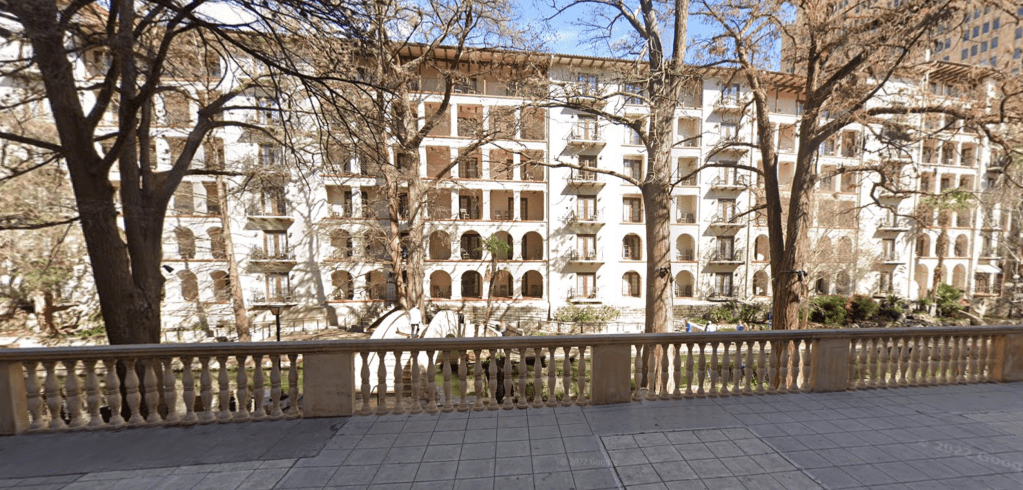
Today the location of St. Mary’s is bounded by the Riverwalk, St. Mary’s Street, College Street, and Navarro Street. But possibly best viewed from Crockett street or river elevation from across the river to see the longest continuous stretch of the building.
The work of Brother Francis
There are many historic attractions to see in San Antonio, but few that give credit to one person whose work was devoted to the building of such an important and impressive structure. Brother Francis and his crew lifted the limestone blocks, placed the mortar, plastered the walls, and built to accommodate the growing college and their mission of education.
In the mid 60’s the exterior was changed to a Spanish style and a six-story addition was added (far-right in the photo above). The building was converted to the La Mansión del Rio hotel along the way, yet the experience of the rooms(dorm rooms), courtyards(sports areas), and lecture halls(conference rooms) is very evident. Knowing this history a stay at the hotel allows one a pleasant reflection on college life along the Riverwalk within the masterpiece built by Brother Francis.
The building was appropriately recorded as a Texas Historic Landmark in 1969.
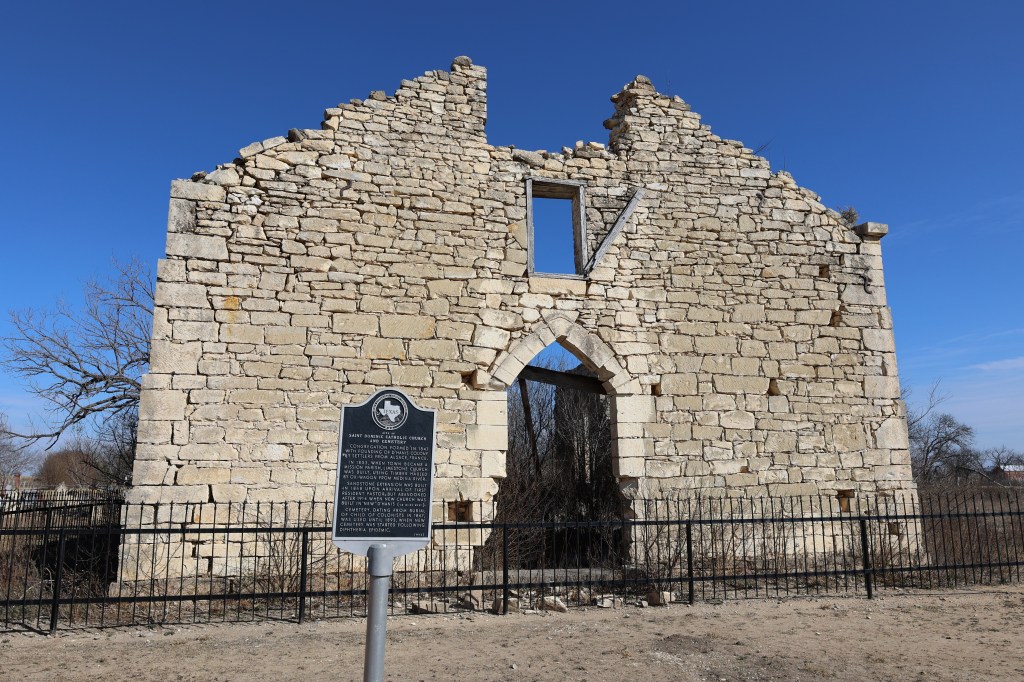
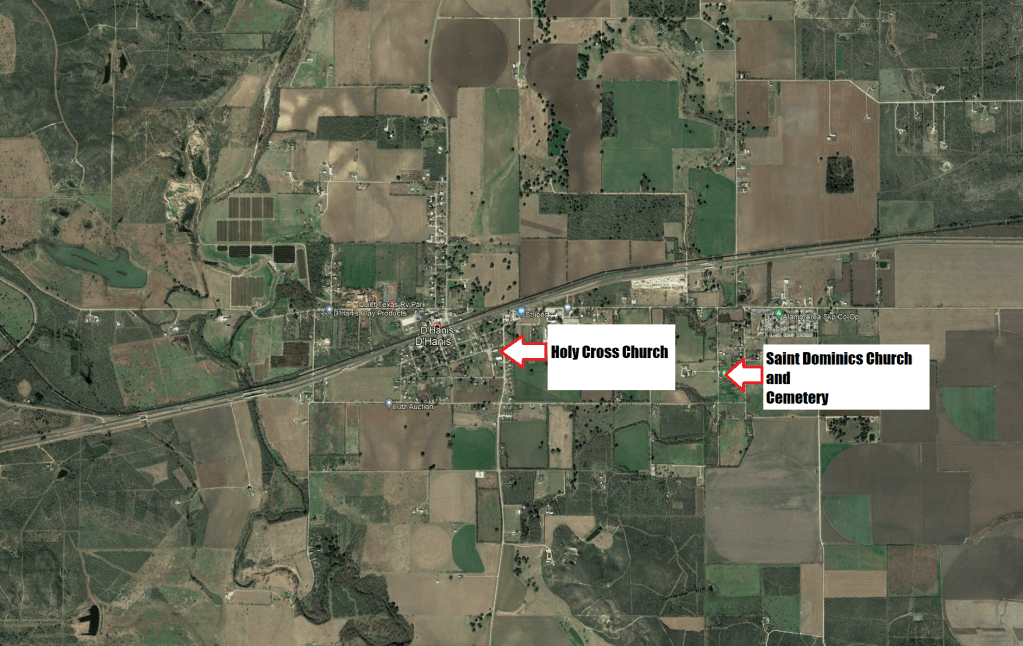
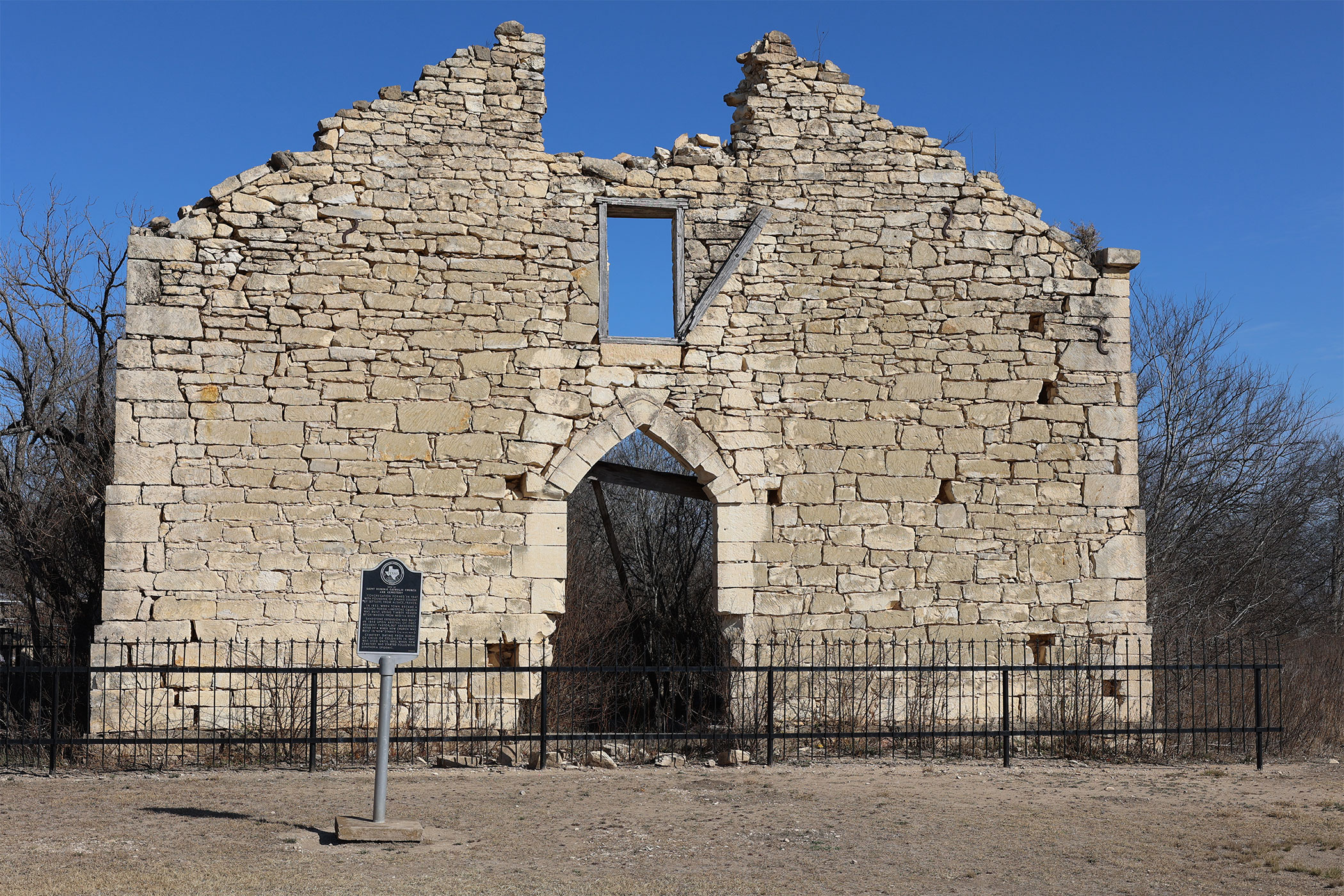
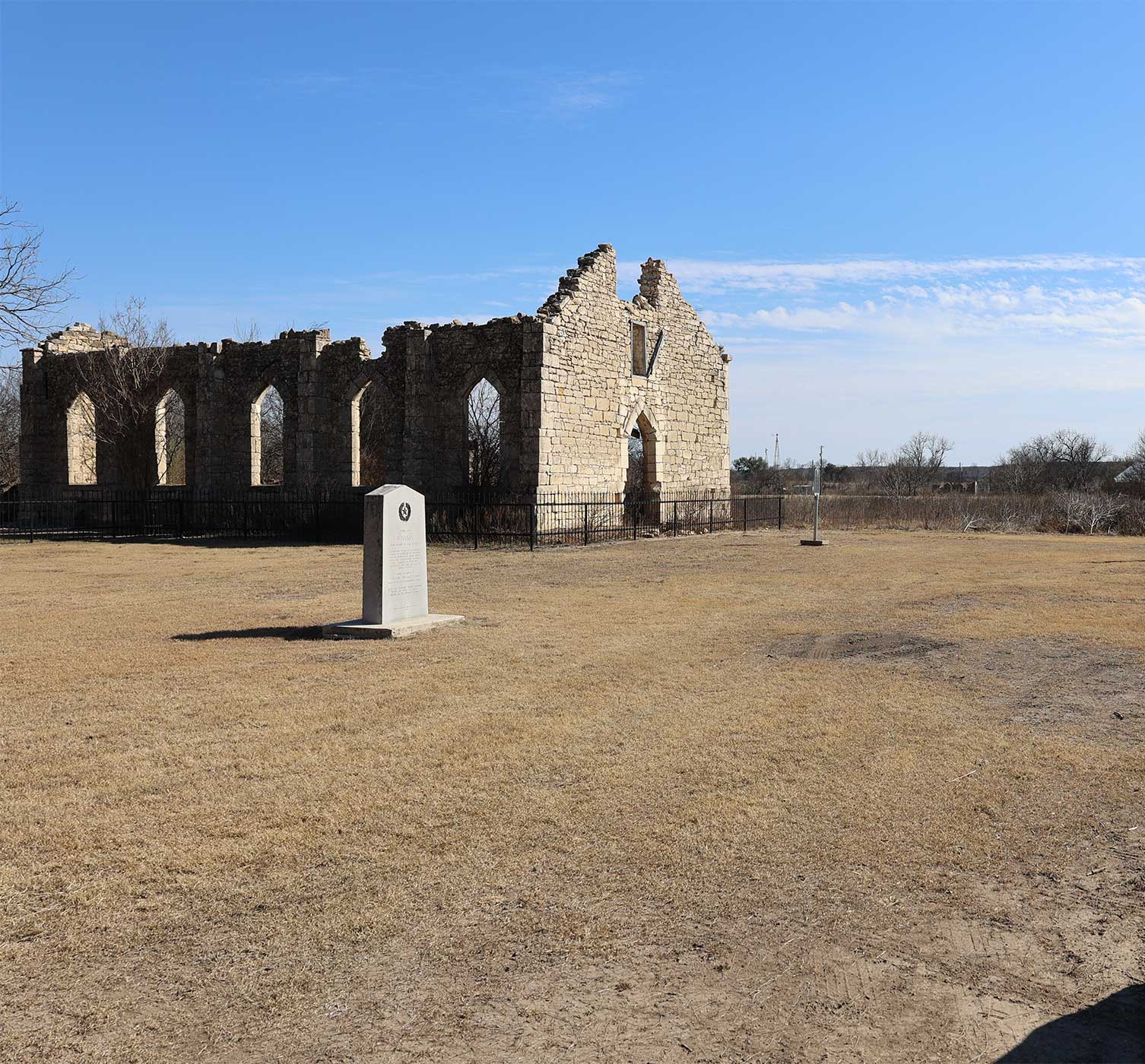
The Texas State Historical Survey Committee recognized Saint Dominic Catholic Church and Cemetery in 1972. The remains/ruins of the church can be seen in D’Hanis Texas 55 miles West of San Antonio just off Highway 90. Located in the Castro Colony of D’Hanis the architecture is representative of the early immigration of Alsatians. The church construction began in 1853 using limestone from a local quarry. Ox-Wagons carried timber from the Medina River, likely at Castroville.
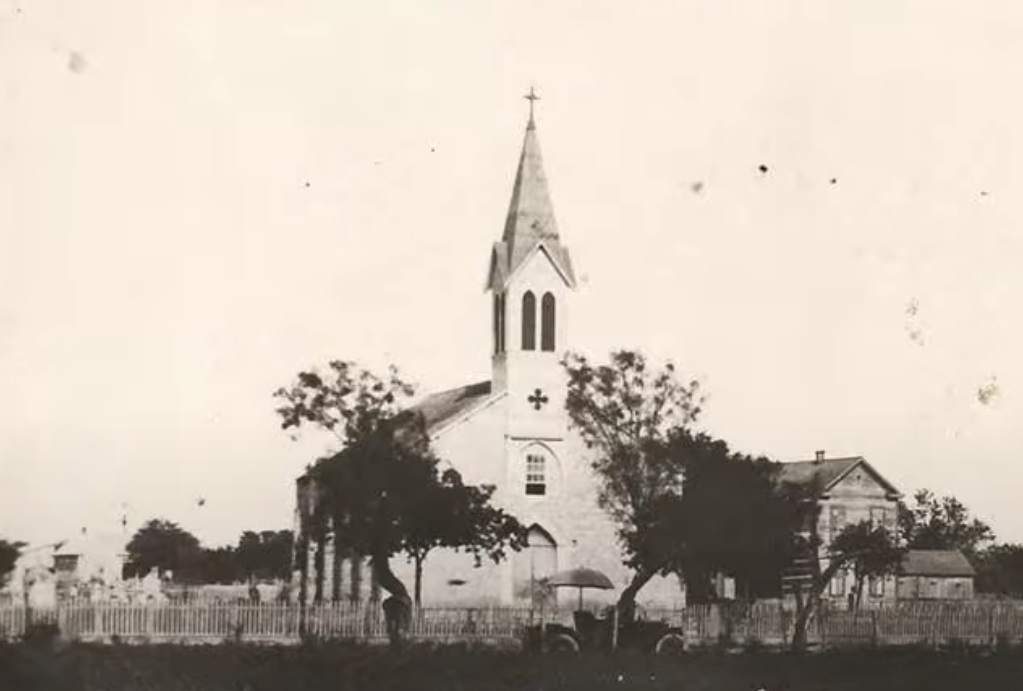
Saint Dominic Catholic Church – Limestone Block Construction remains on this sidewall with arched window Photo taken late February 2022Saint Dominic Catholic Church – photo credit(2). Note the main door arch and window match. This photo is from about 1912
By 1914 the structure was abandoned in favor of a site in “New” D’Hanis just 1 mile away. When the Southern Pacific Railroad made their new survey the depot moved to the northwest. The more official town center had relocated. To best serve the community several new sanctuaries were built through time. The interesting history of the living and thriving community of faith continues(1). The current Holy Cross Church is fittingly built of D’Hanis brick, a local source of Hand-Made Natural Terra Cotta (2).
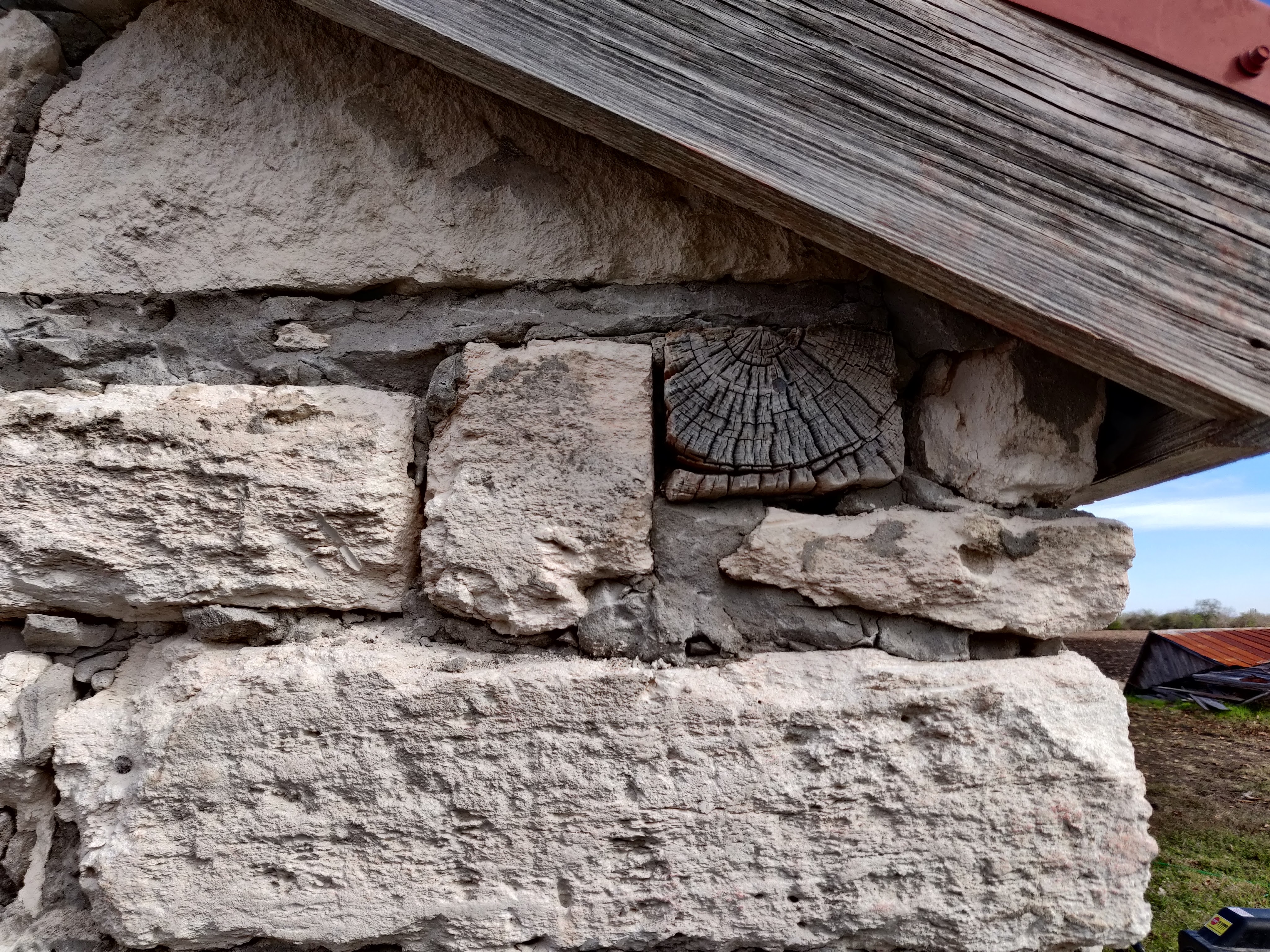
The limestone remains, while the cypress timbers have mostly vanished.
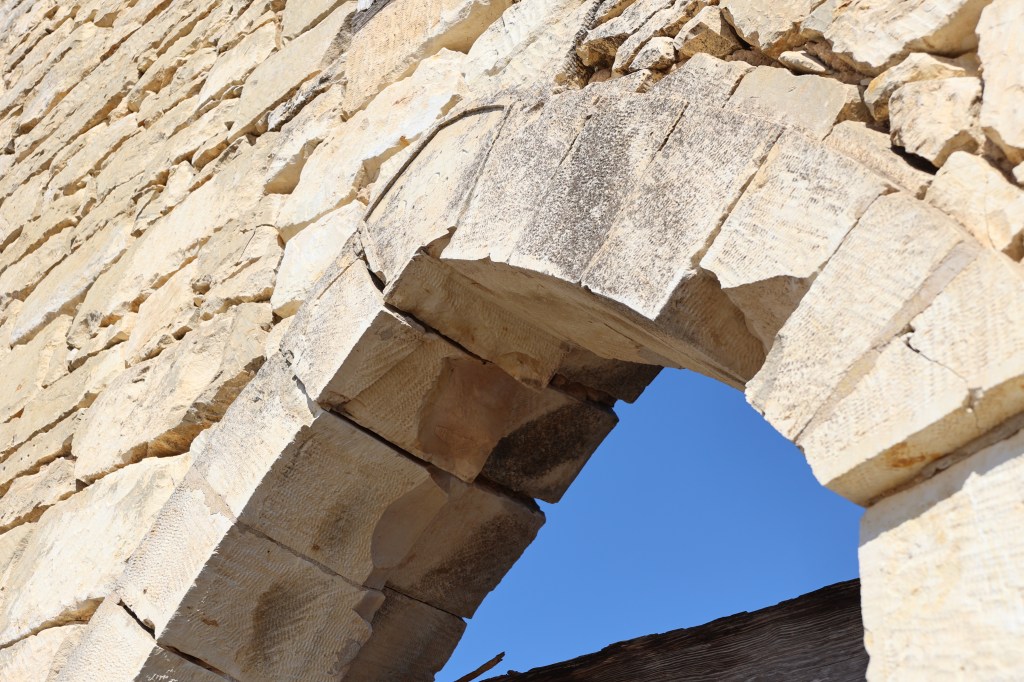
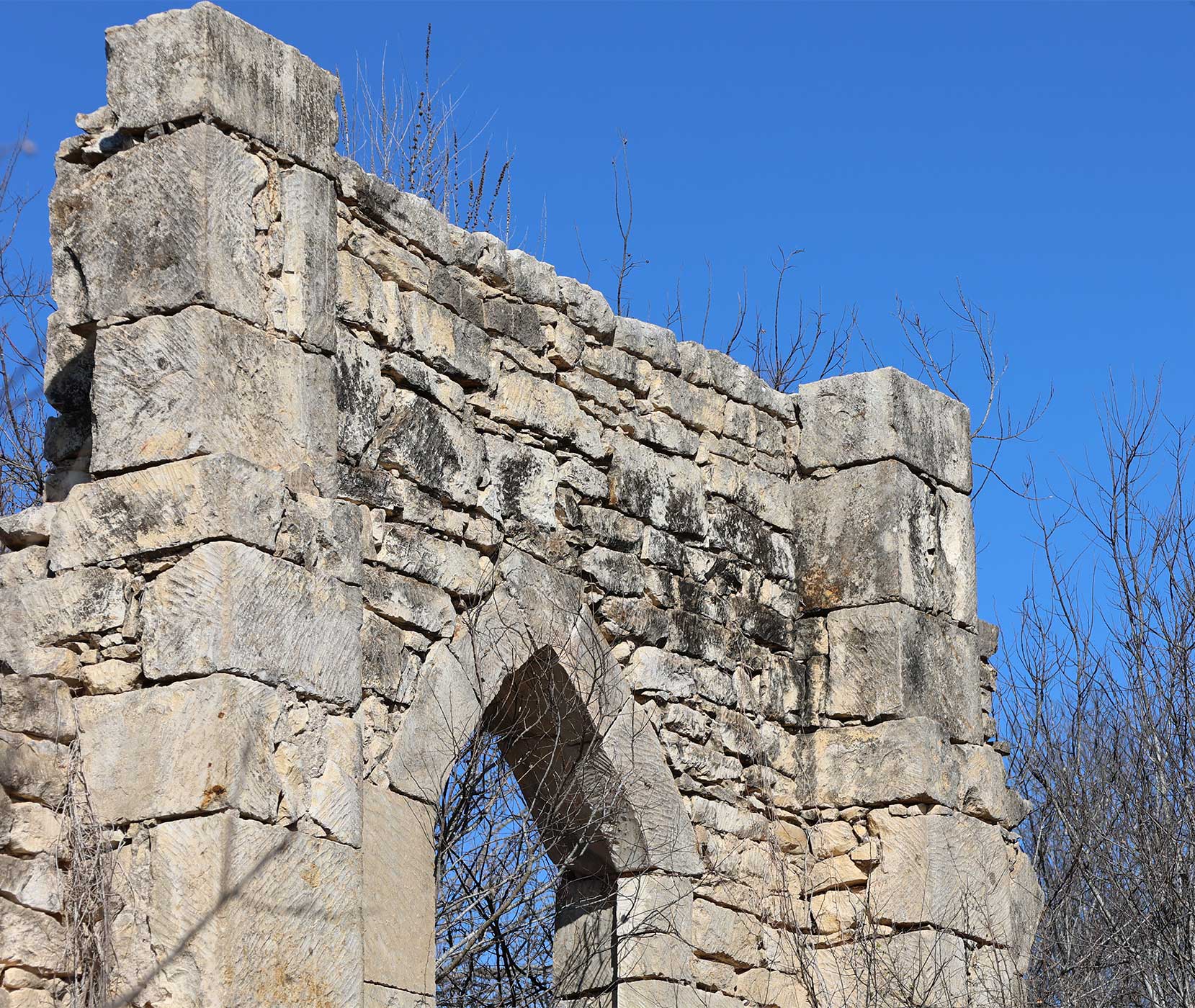
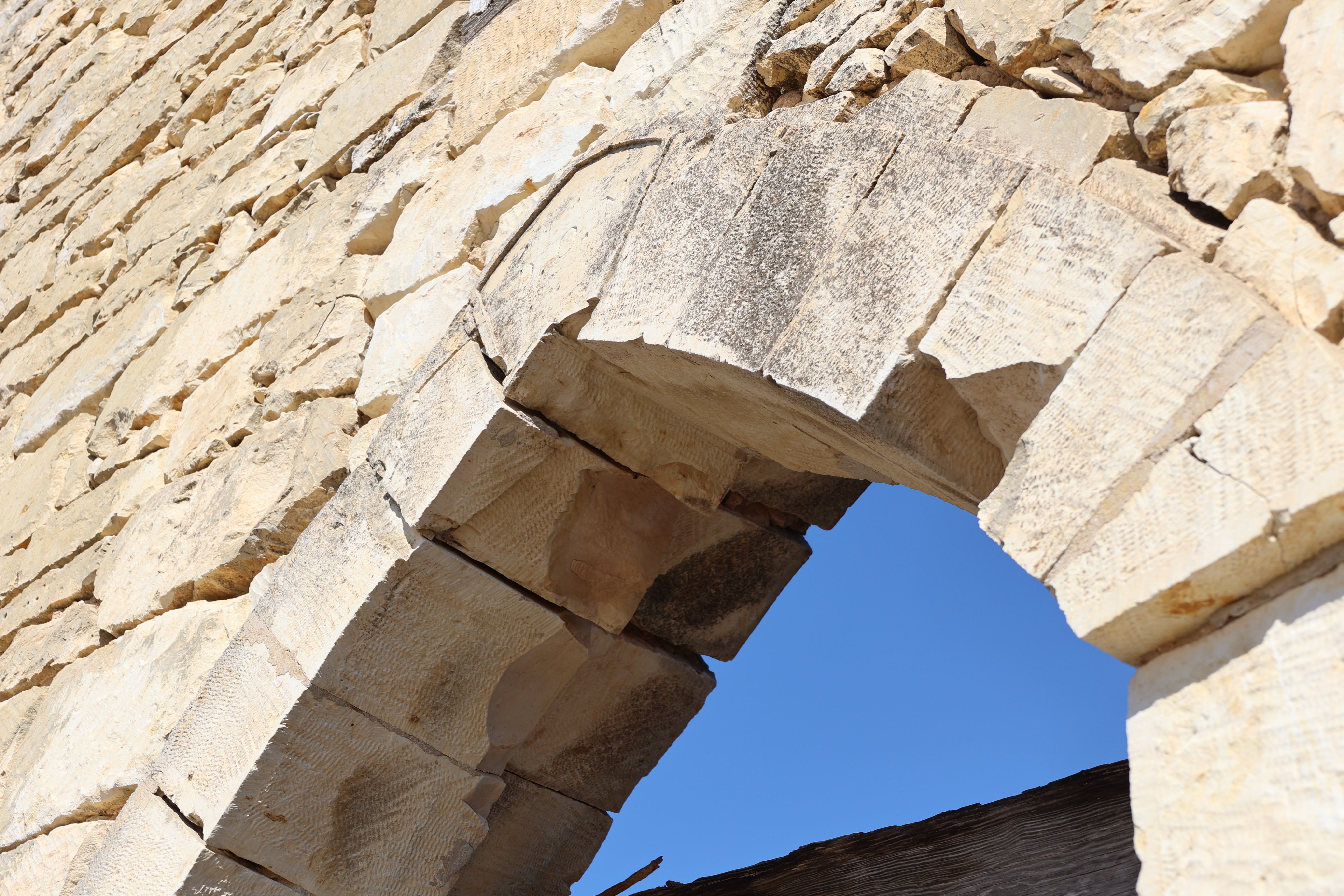
The arches are formed beautifully from large blocks of limestone and secured in place with a large and ornate Keystone. Gravity does all the work to interlock and support more block stonework above. Columns of very large blocks are on either side of this arched window.
Keystone (central Voussoir) at the top of this arched window support rockwork above. Blocks below the keystone and along the arch radius are called voussoir blocks.
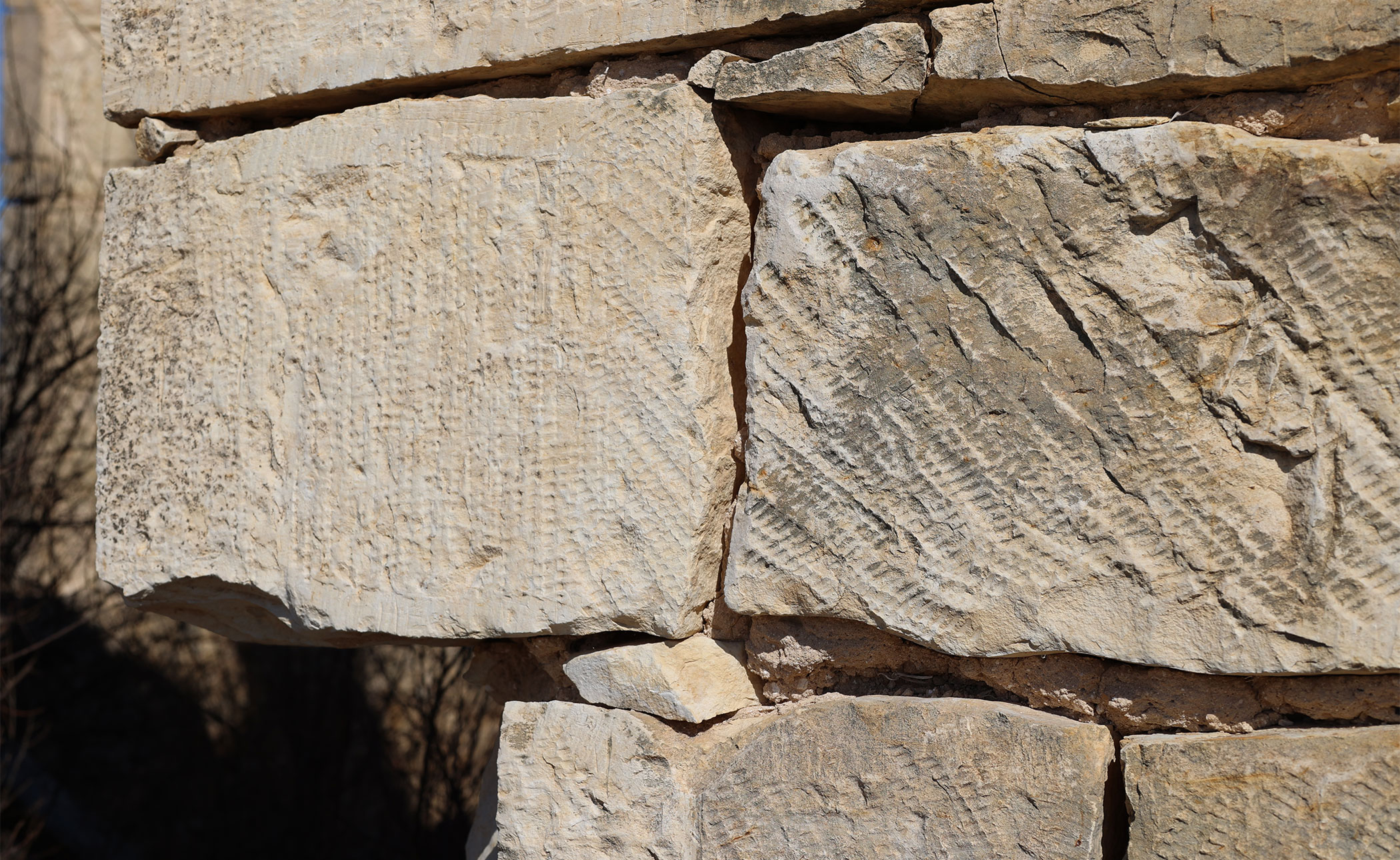
Church windows would have been filled with stained and ornate glass. Exterior stone faces all have noticeable chisel markings created by the stonemasons. These increase the ability of the flat stone faces to hold plasters and future lime washes. How many stone masons were needed in this area to build this significant structure and apparently so many more homes?
References:
(1) The history from Saint Domenic Church to the current Holy Cross Church is chronicled here.
Back to Originals. Prior to about 1890, lime putty mortar was used for the construction of the Alsatian and other stone structures. It was one of very few choices, available and well known by stone masons. Without proper maintenance, sooner or later erosion, settling, and use causes stone structures to fail and require repairs.
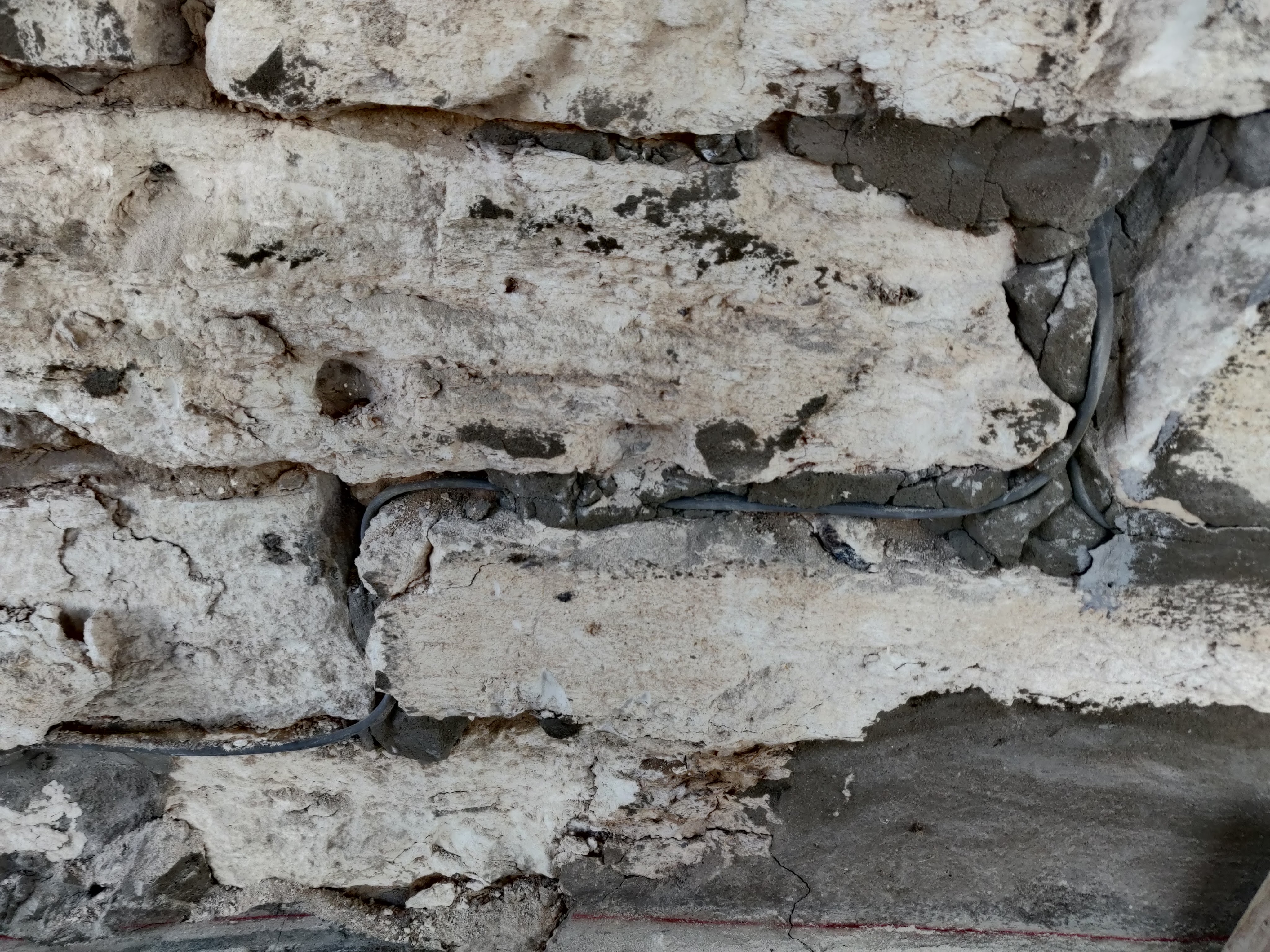
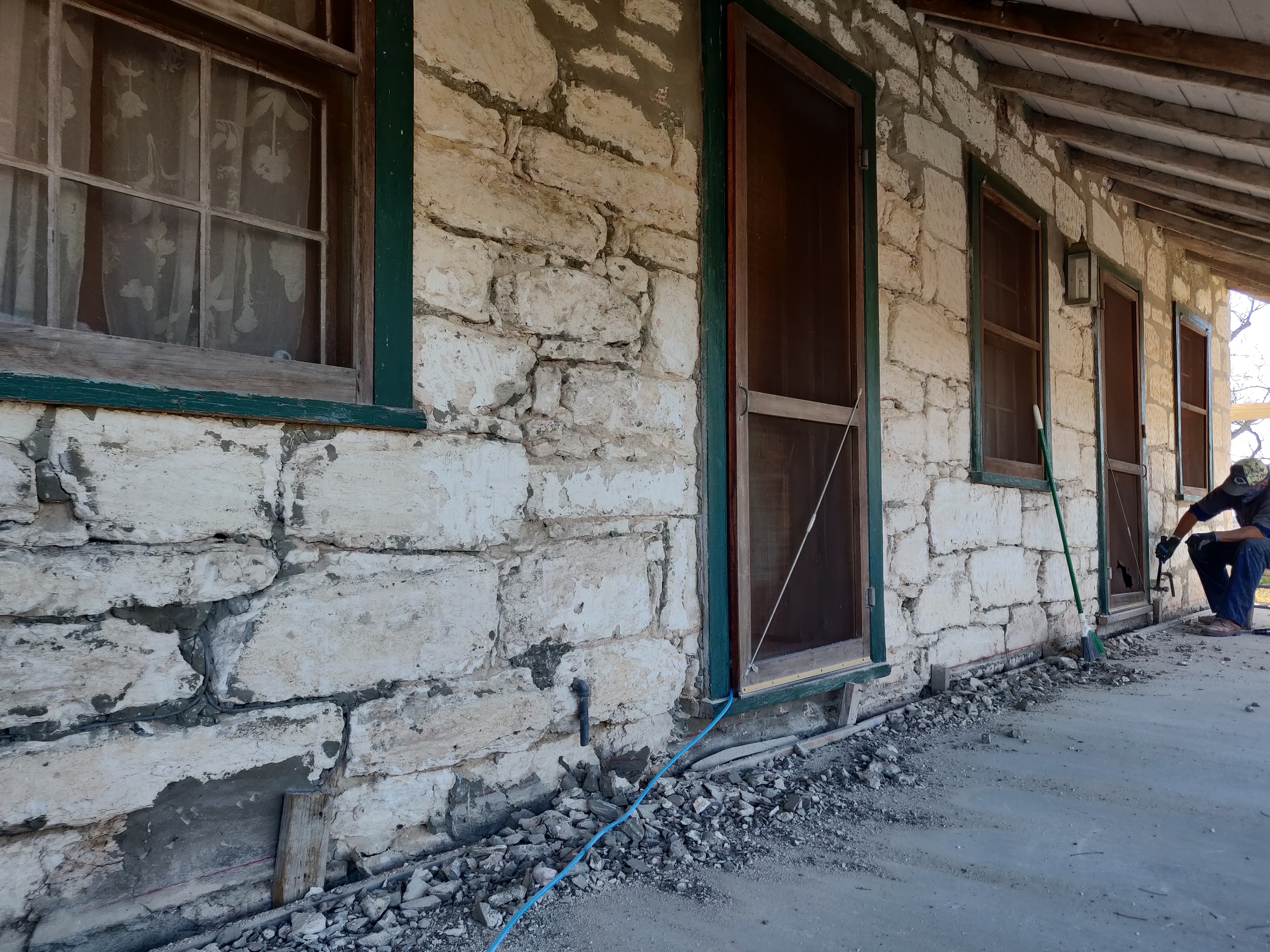
Advances in technology are often overused and misused. One great example is the use of Portland cement to repair stone homes built prior to 1890. Portland cement came along in the 1890’s and was advanced and perfected to bond aggregate into a solid foundation or sidewalk or highway overpass. But in this very relevant Alsatian restoration, the original is better than the new. Ask any skilled architect or stone mason. Portland cement is very good for other purposes, but it has characteristics that makes it a bad repair and patching material for a limestone block home. It expands at a different rate than the native limestone in the case of temperature and humidity fluxuations. It is also a glaringly grey, ugly filler that does not match the tan stones whatsoever. It looks out of place and it is a bad actor, accelerating further erosion and damage.
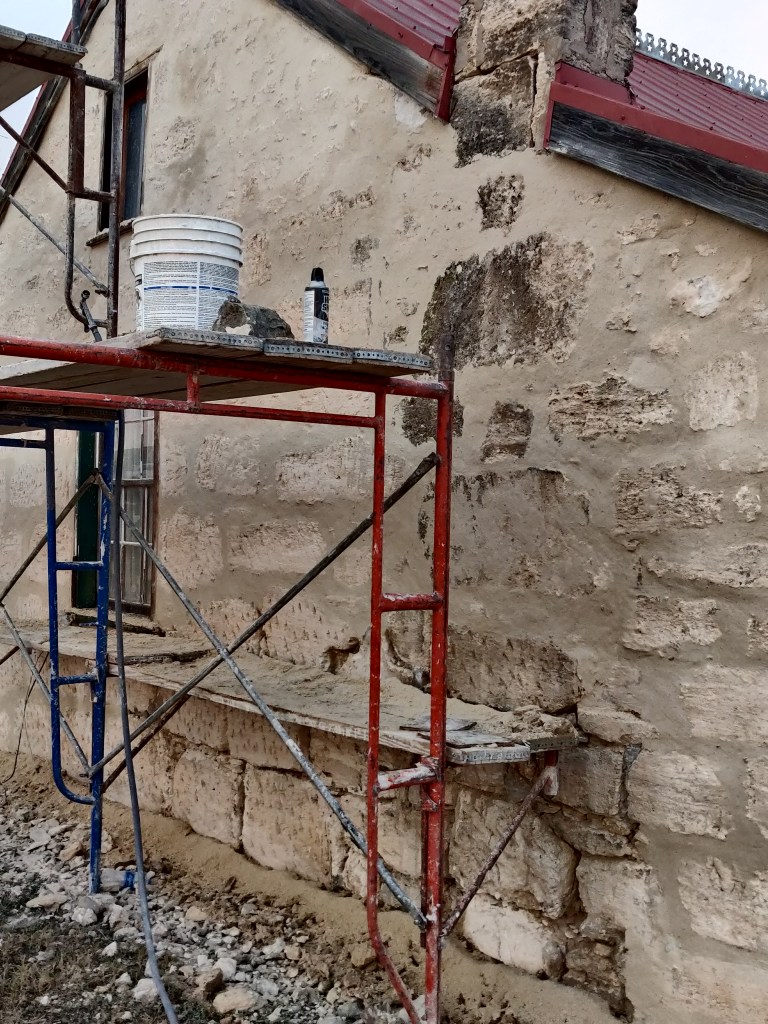
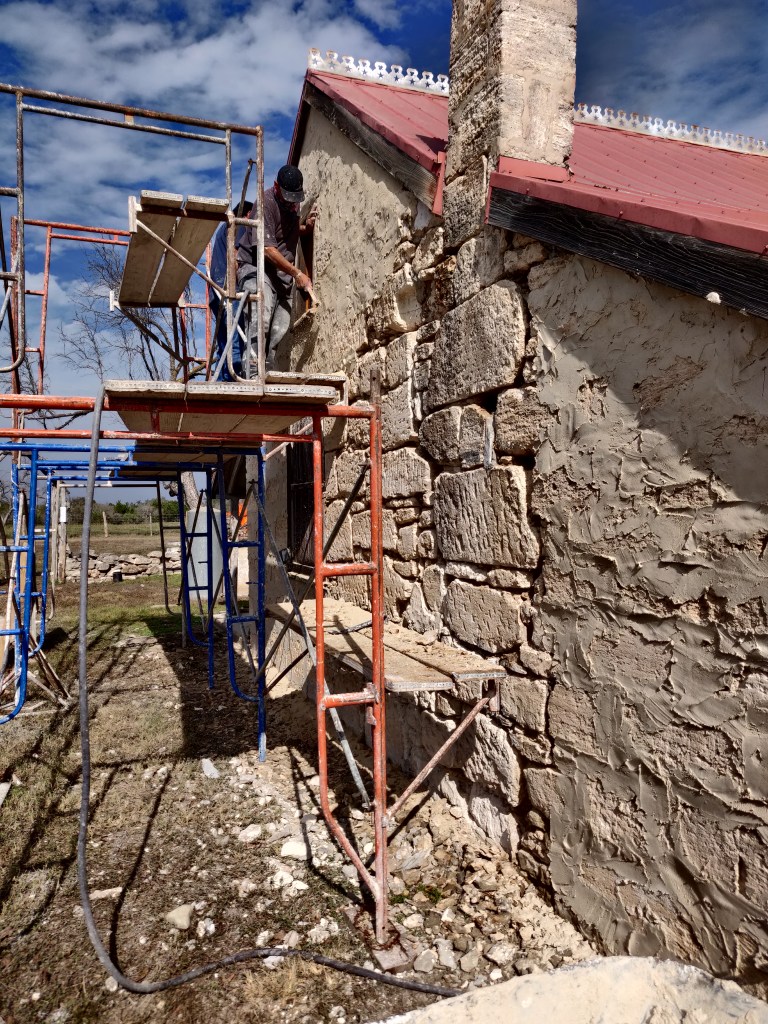
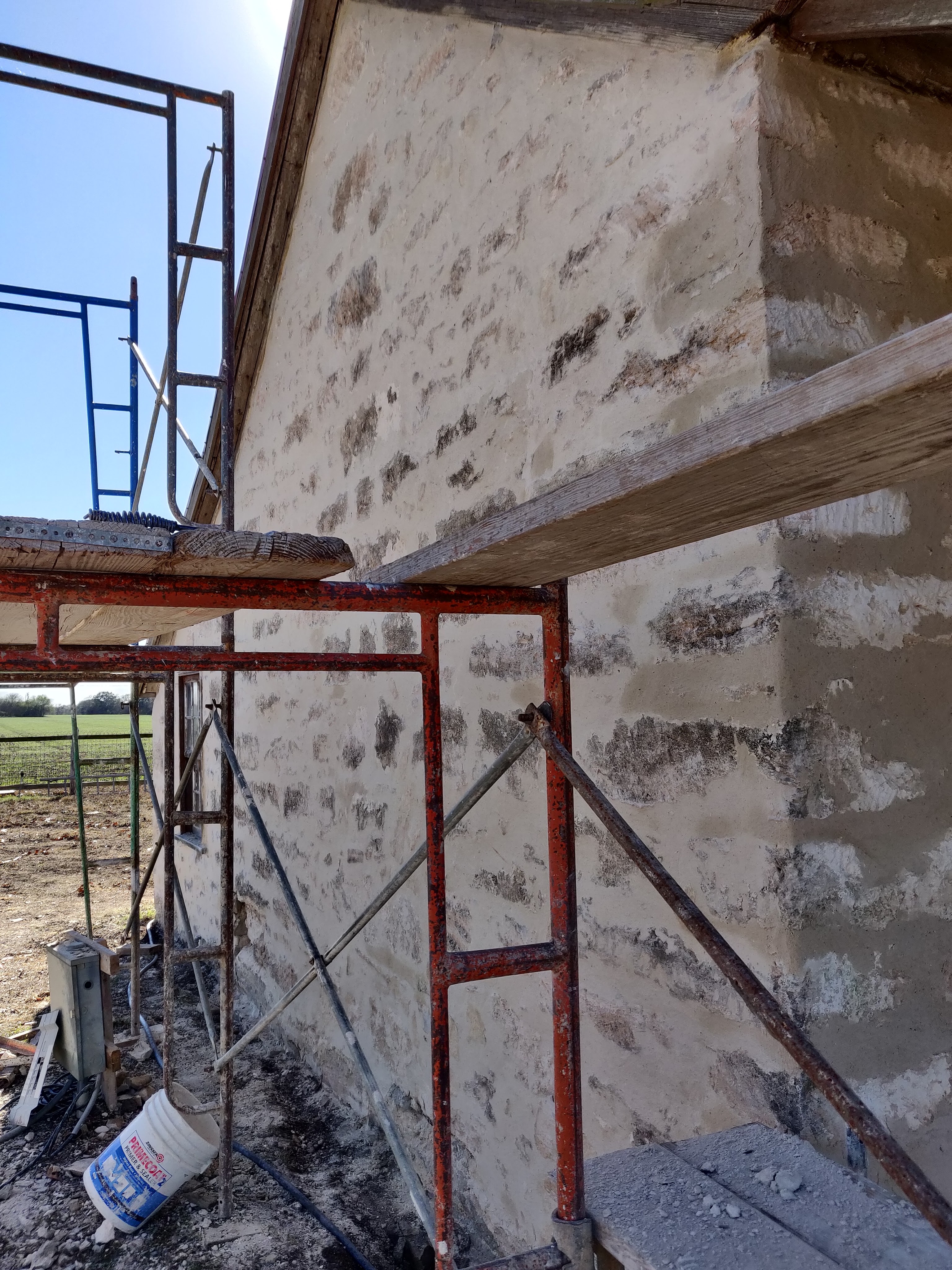
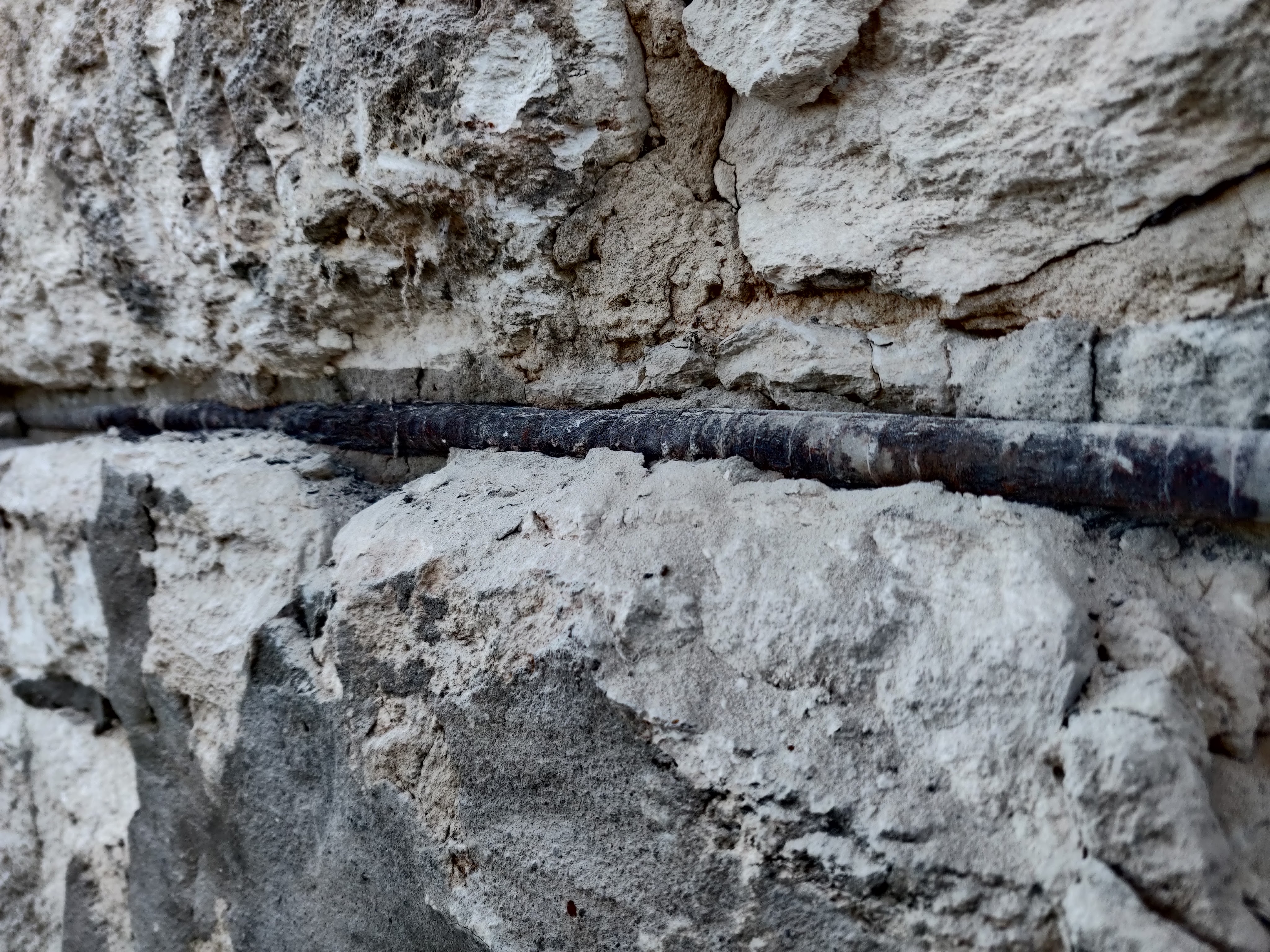
Replacing the mortar in between the stones is a process called repointing. First all of the exterior hardware is removed, electrical wiring, gate attachment points, rods, well intenioned steel plates, pipes, re-bar and more. Then all of the mortar is removed from one side of the wall between the stones-halfway through-whether it is Portland or the original lime putty mortar.
New mortar is made and with proper care and attention, the addition of limestone from the same sources as the stone are used as the aggregate. This gives the mortar a similar color to the stones, but also grows and shrinks along with the stone more harmoniously. The mixture is troweled by hand into the crevices to rebond the loose stones and to further stabilize all others.
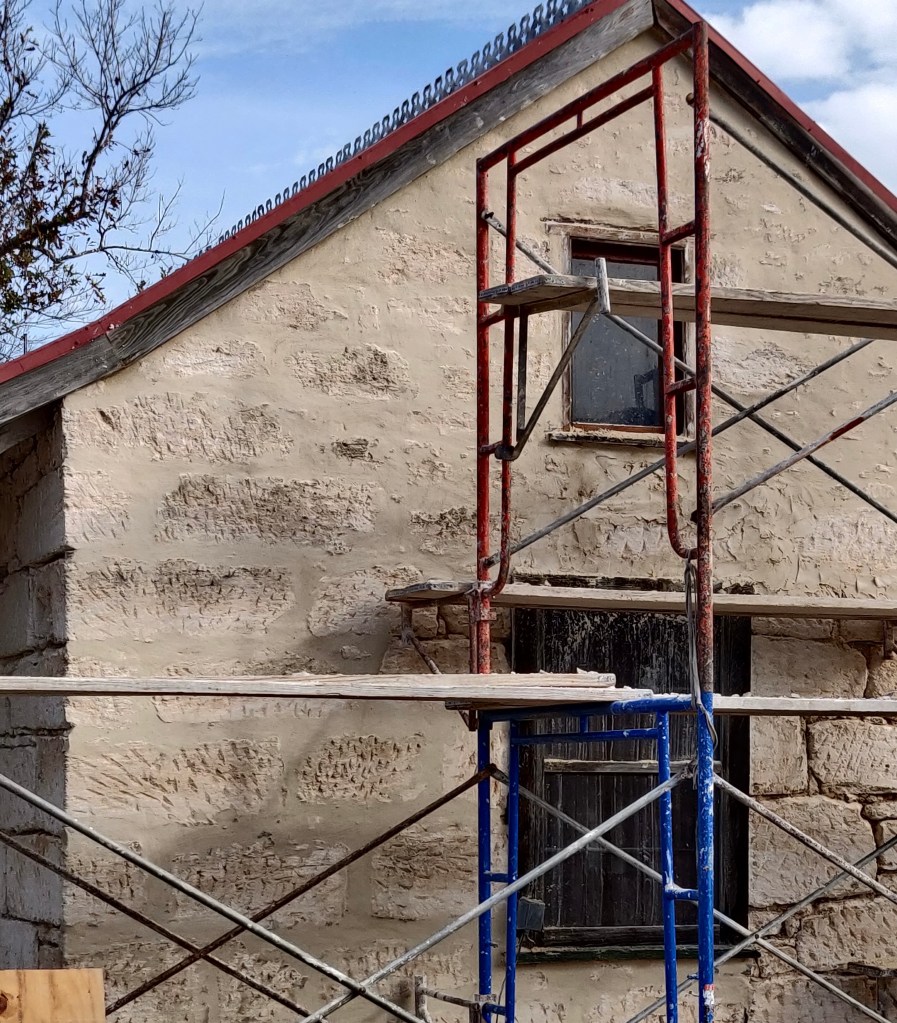
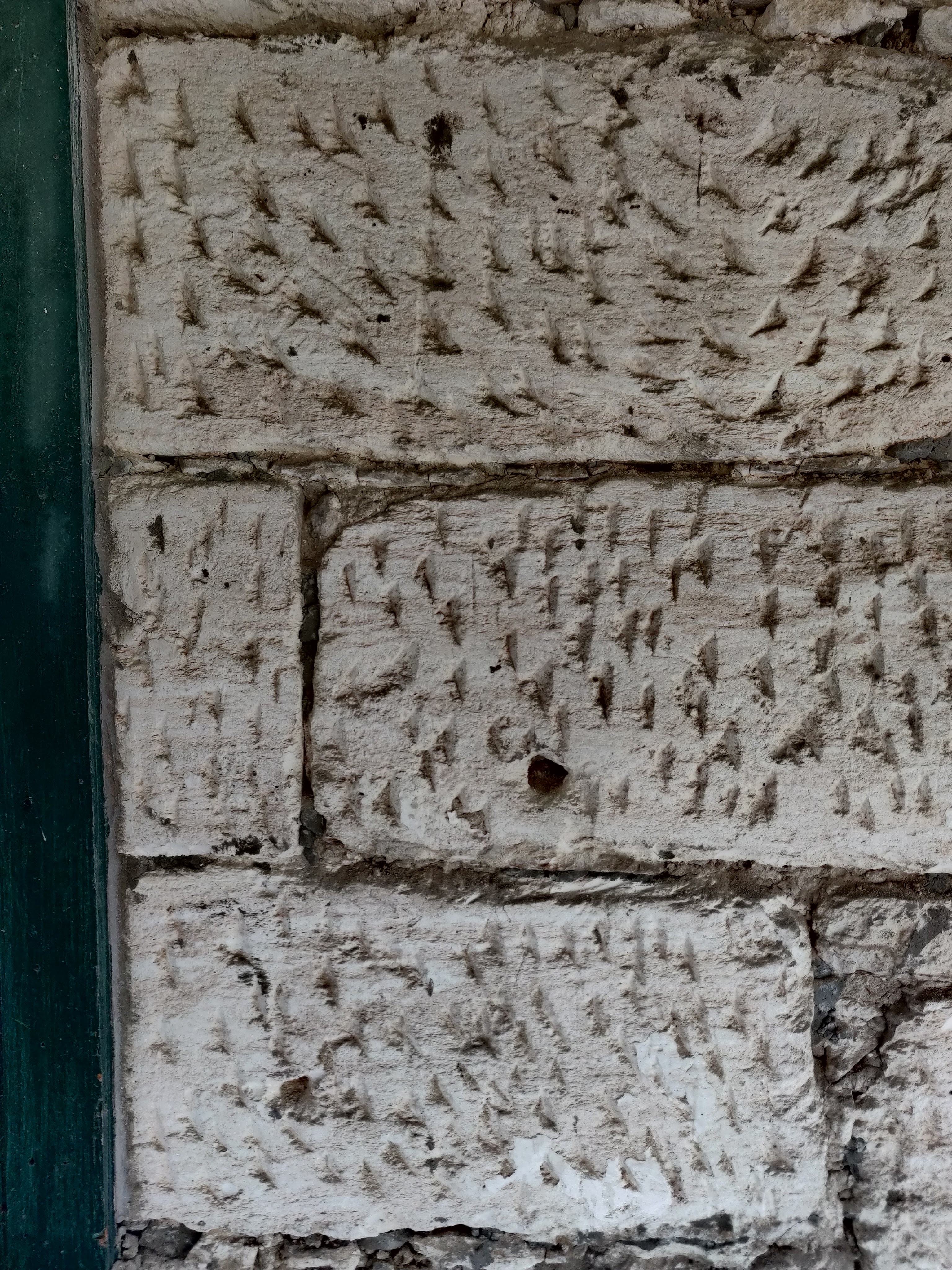
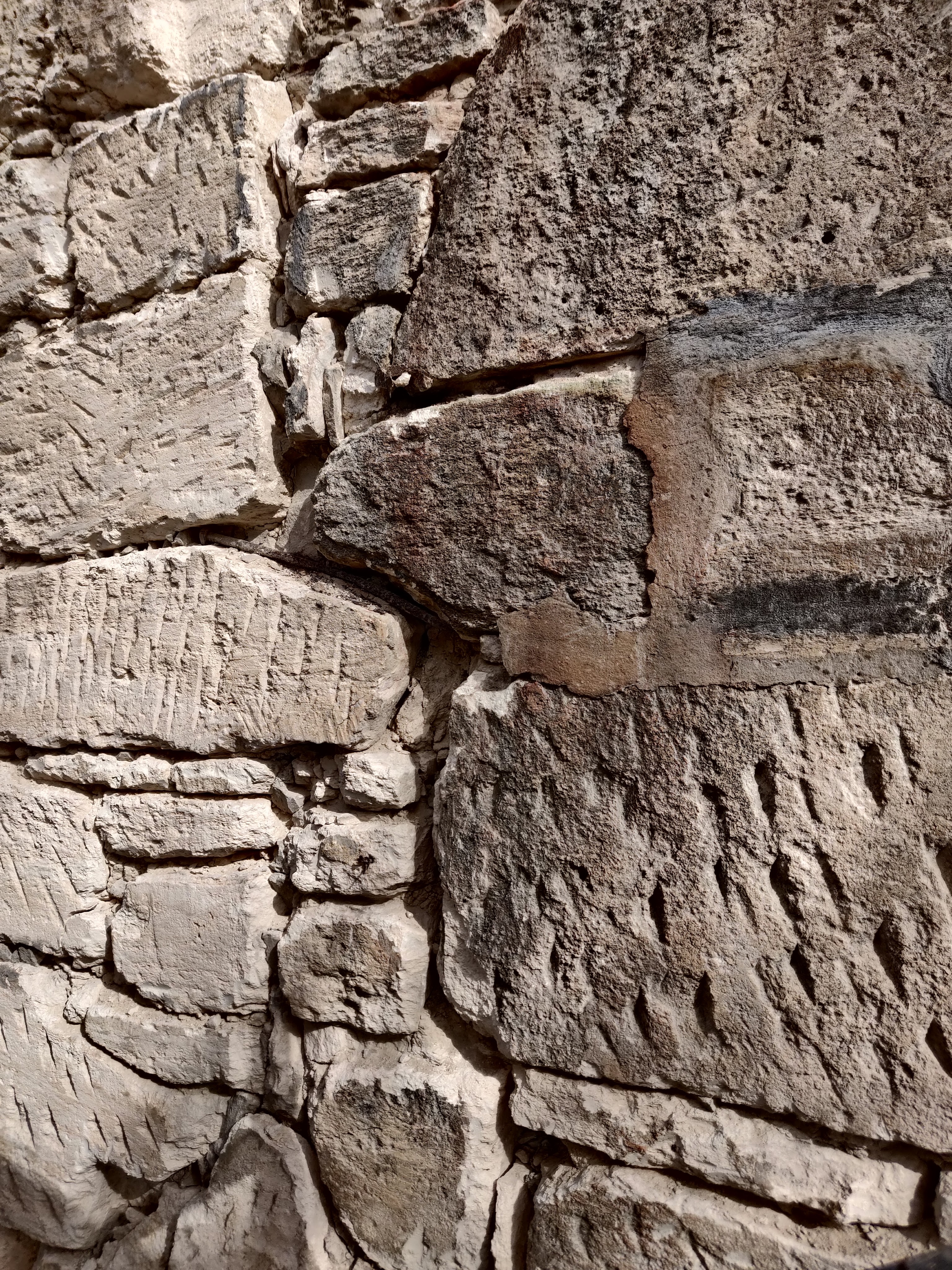
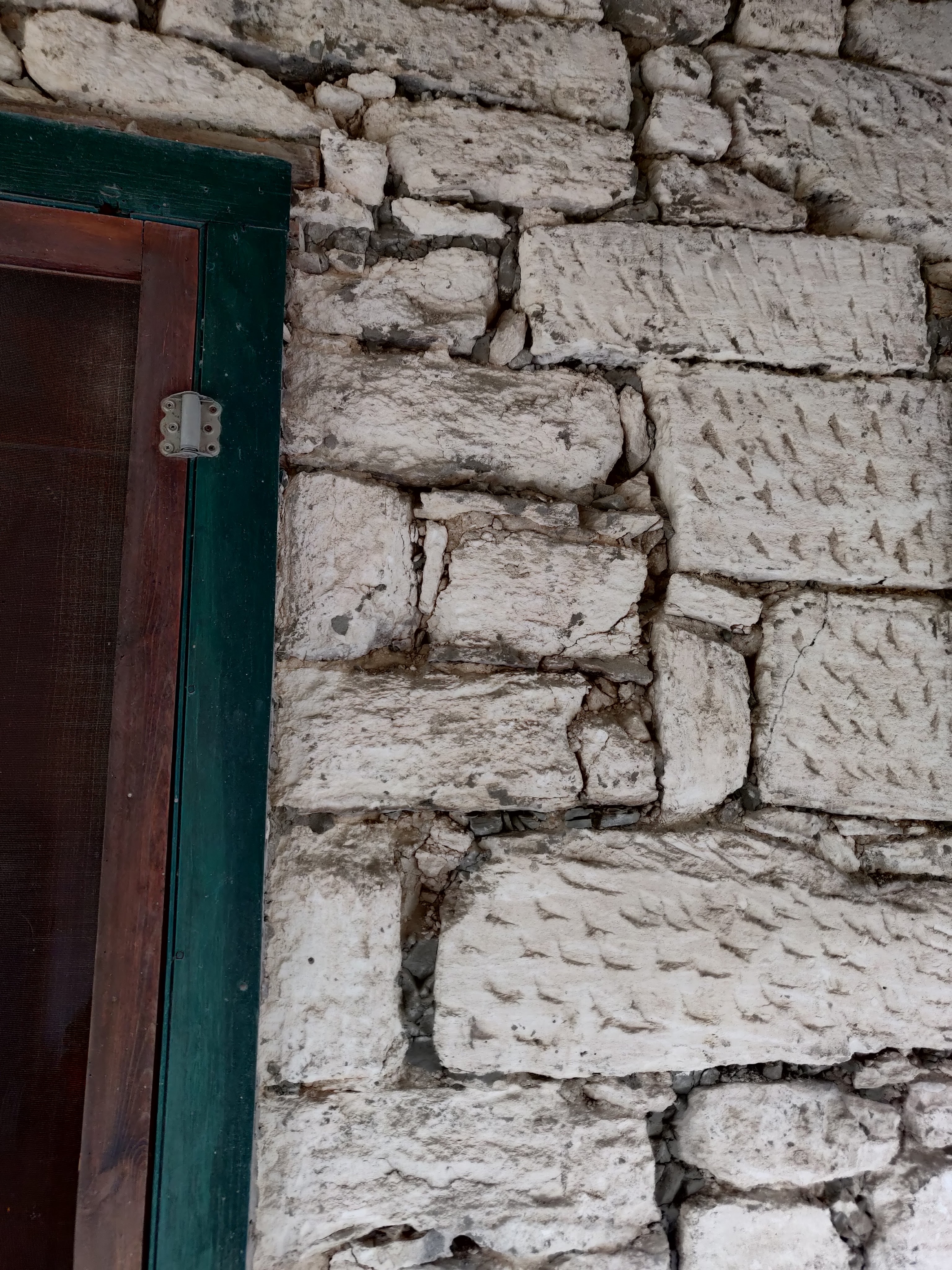
Most of the larger stone blocks at the Rohrbach home have chisel marks on the stone face. This process was done by the original stone mason to increase the purchase or bonding power of the planar wall surface to accept a lime-plaster scratch coat of lime whitewash.
Images above from the 2021-2022 ongoing renovation. There are different chisel marks in each room and wall indicating different masons or time periods for construction. The Rohrbach home was built one room at a time, probably over several years.
Lime Mortar Chemistry
Calcite fired in kiln to produce quicklime.
CaCO₃ + HEAT → Ca0 + CO₂
Quicklime slaked to make hydrated lime.
CaO + H₂O → Ca(OH)₂
Hydrated lime (dissoved in mortar) exposed to air, reforms into calcite.







 ALSATIAN Homestead