178 Year Old Alsatian Cistern

1844

The Alsatians in 1844 knew the importance of water and used their knowledge to insure that they could survive and thrive in Medina County Texas. They arrived for the promise of land and freedom. They had to survive, build a cabin and farm for 3 years to get title to the 160 acre homestead.

An immediate need was water, and in increasing amounts the more they developed, grew crops, and their families. The immediate technology was surface water in the form of springs and small ponds. They called surface water “the source”, or “die quelle”. These natural springs were running when Henri Castro brought them into Galveston, past the Alamo in San Antonio and ultimately modern day Castroville along the Medina River.

No source of information can be found about the water technology strategies of the Alsatians. Even though the events leading to Texas Statehood are well known, the exact details of survival by homesteaders with respect to water is not. Other more colorful texts about Indians dominate the written record. The author surmises much about the strategy of water. Refurbishing water features on two homesteads is inspiring.

Clearly surface water was the most readily available and easiest to put to use. But the endeavor of building a Cistern was not a task for the first day on the homestead.

Cistern Technology & Strategy

There are many skills required to build a stone, underground Cistern. Masonry skills were needed with great certainty to place the stones. The use of Lime Mortar and possibly clay as a sealant to form the Cistern walls and floor. Once completed the Cistern on our farm is nearly 20 feet deep. Several ladders and equivalent structures to modern-day scaffolding were required to build a deep tank. Add woodworking skills to the list. All of the fasteners we have found in existing structures were either round wooden pegs from carpenter’s or square nails made by a blacksmith.

Getting the water to surface once finished also required a pulley system and ropes. These structures were either built on top of the well walls or around the walls to enable a bucket to be lowered and water lifted. It was likely a continuation of the system used during construction for dirt removal, stone and mortar delivery.

Stone homes, and skilled masons existed, and probably hardware and fasteners could be found in San Antonio. But these skills had to be allocated between housing, water works and the likelihood that the venture would succeed. It is known that the typical 4-room Alsatian stone homes were often built one room at a time and likely one room per year. Even this progression is not well documented. Family growth probably dictated the housing needs more than anything. Where the Cistern fits into the timing is not well known for our homestead, usually you are lucky to have a dated cornerstone on a home.

Cistern Construction

But when it became time to build it, the task was not a small one. Here are some numbers for us to work with from our Cistern.

Above Ground Wall
16″ thick limestone walls-large blocks, 42″ tall, 96″ inside diameter

Below Ground
0 – 2′ deep 16″ thick limestone walls – large and medium blocks.
2 – 10′ deep 12-16″ thick walls – medium and smaller blocks, Inlet piping typically included at this elevation.
10-20′ deep 10-12″ thick walls – smaller blocks
The diameter of the cistern is fairly consistent with the surface diameter regardless of depth.
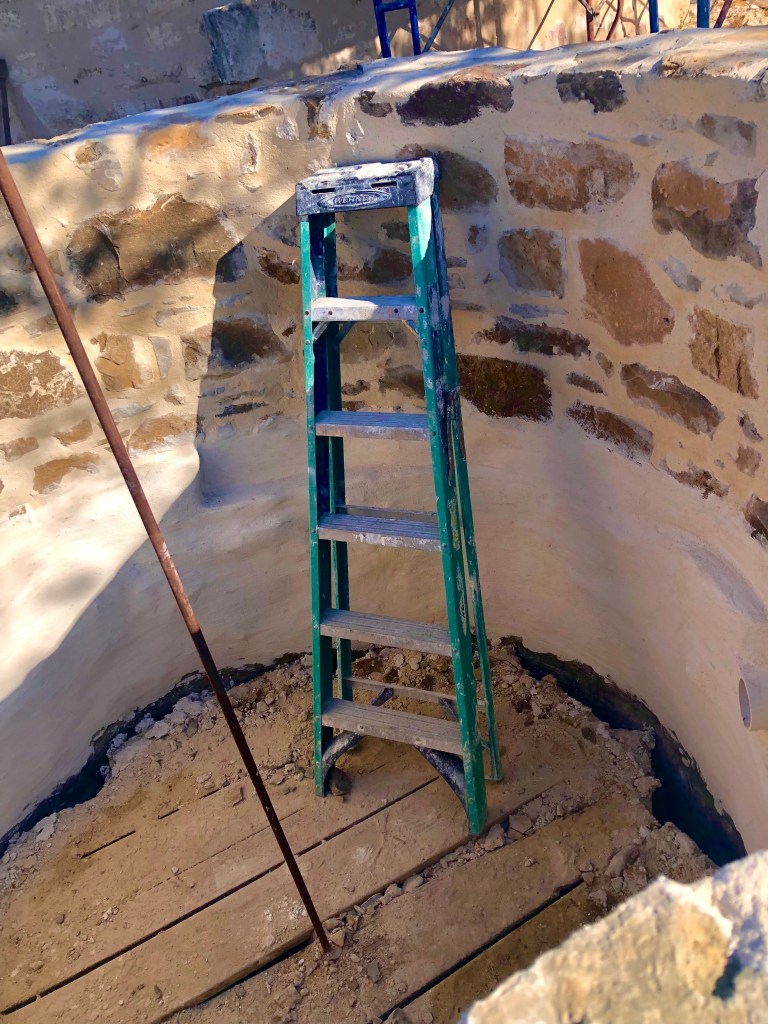
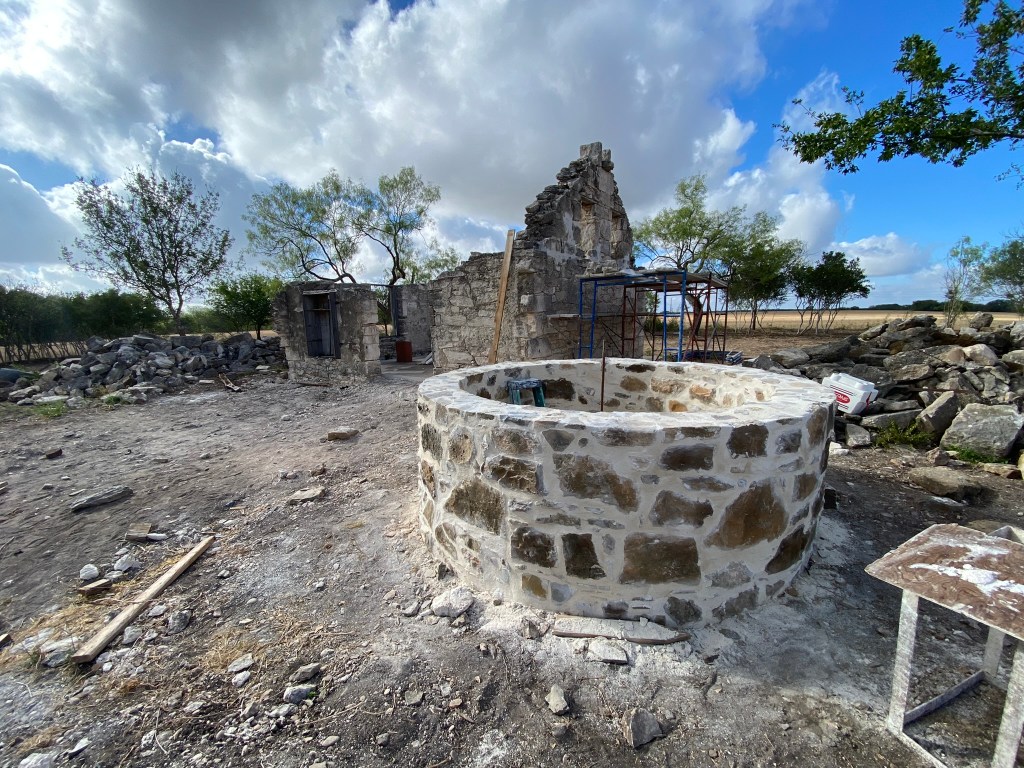
Cistern Restoration Summer 2022 – Note pipe on the far right for roof water

Maximum Practical Volume (Water level available 18′)
6,700 Gallons -or- 25,600 Liters

Dirt Removal
128″ Diameter, 20′ deep, expansion factor 1.20

2,145 cubic feet -or- 79 cubic yards

Construction Time Estimate- Manual – 3 people
Above Ground Wall – 3 days
Digging – 3″ per day (about 1 yard per day of dirt removal) 80-days
Rocking – 6″ per day 40- days
Lining – 4′ per day 5 days
Overall 128 days

Does not include time to quarry stone, transport slurry materials, removal of dirt and cuttings from the site. The homestead had many other chores, and this was just one of them.

The results

Today the average family household uses 300 gallons per day. But without all of our modern conveniences allowing so many luxurious water uses, a rural Alsatian family might get by on much less, say 50 or 100 gallons per day. That is a lot of bucket hoisting from the Cistern and still possibly high. The Cistern would last over 120 days without rain for the minimum use case. A pretty good safety net.

The average F-150 pickup can only carry 1/2 yard of material. It would take 160 truck loads to remove the uncompacted dirt from the construction.
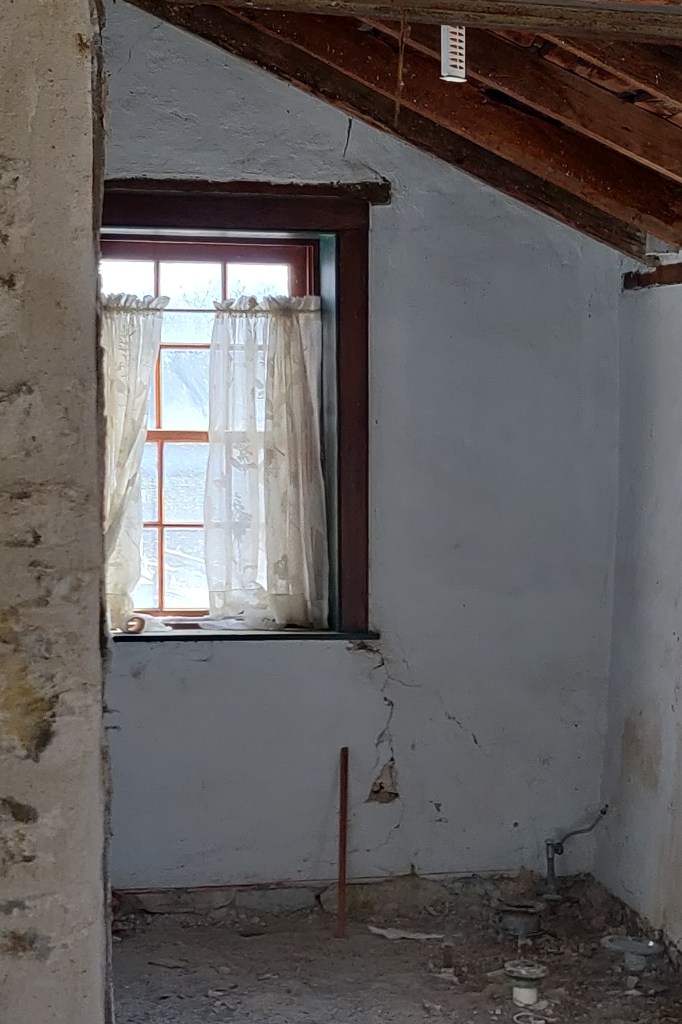
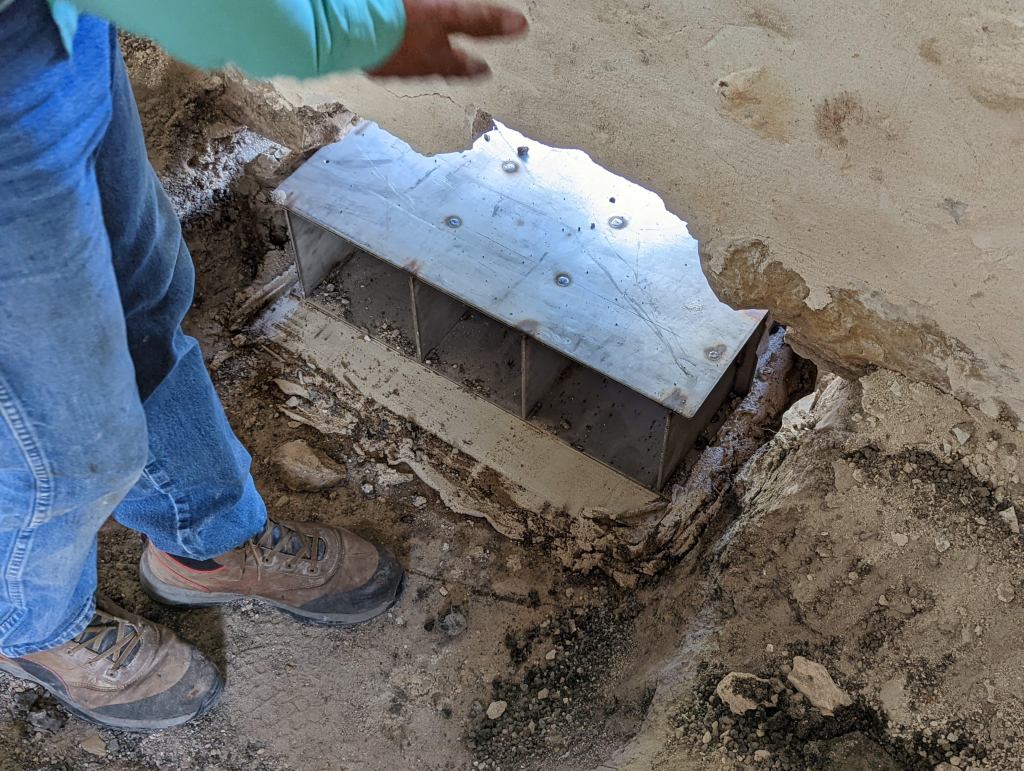
Pass-Through Box

Getting utilities through the wall of any stone building after the fact usually means somebody missed something on the plans. There are a lot of new and old homes with holes in stone walls for electrical service between rooms, gas lines, water lines, cable TV lines, ethernet wires, drains and more. But without some way to seal and make the void structural, there can be consequences. When it is a restoration project on a home that is over 150 years old you just have to make it work. Live long enough and you get two shots at it.

The first time

The results of the 70’s upgrade
Cracks in the wall, moisture and bugs entering the home

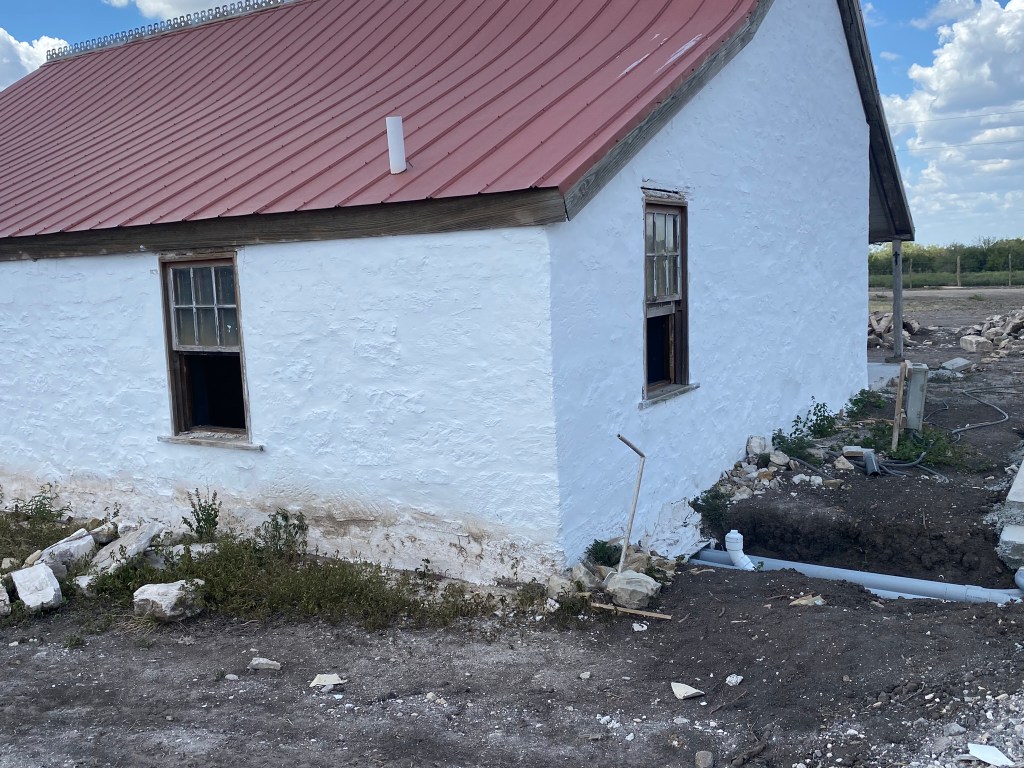
In 1850, there was probably an out-house and this small room was a bedroom or work room. But as time went by, the back room was converted to a bathroom. In the 70’s a tunnel was dug under this wall by hand and the drains and pipes were inserted and the soil neatly compacted. A good concrete and tile floor and, for the first year or so things were looking good. The experience of living in this home proved the upgrade to be a good idea, convenient, modern, but in the long run problematic.

First, there were tiny cracks from the floor up to the window above the earthen tunnel, and this allowed bugs to enter the home. Next the cracks continued to enlarge and the window stopped working well. The cracks also allowed moisture to get under the floor and then tiles started to loosen. Thankfully, nothing leaked or shorted. This was not a quick failure, it was more like a 25-year slowly worsening type of situation. Good skilled craftspeople can spot this type of rookie mistake a mile away. Our stonemason knew why it all happened in the first place.

The test

Stainless Steel Structural Pass-Through Box
Wall is 18″ thick

It was going to happen. As we restored and refurbished, certainly more issues were going to arise. And this is one of those first tests. The stonemason, the architect, and several others all gathered around to give the news. After a while, you can start to read the situation before the conversation starts. The non-normal “Hello”, workers deciding to go dig somewhere else when you arrive, everyone wondering what will happen. The experience of the team really did shine on that hot 104°F Texas day. They were cautiously relaxed, and had several solutions. Veteran problem solvers keep projects moving. There was the drill-holes-in-the-wall solution – no way, the good people at the Conservation Society would never approve. There was the unserviceable, put-all-the-pipes in a ditch and just pour extra cement – no way.

Then there was the most difficult and time consuming solution that sounded like it would last another 150 years. But there were many steps. Draw a structurally sound box, find the materials and a code welder to make it, grout it under the wall, repoint the wall inside and outside, refurbish the window sash, and then you can resume. It had to be the pass-through box solution. I helped dig the trench in 1970 and was not going to make that mistake again.

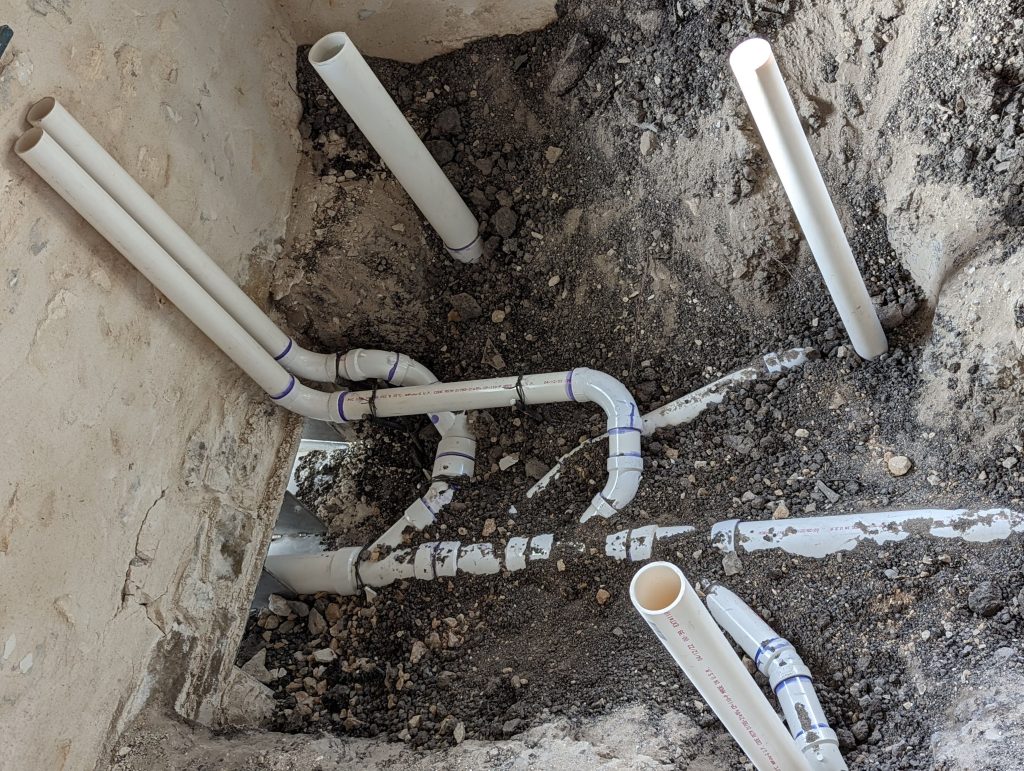
Pass-Through box with drain lines installed
No cracks, progress can continue

Those little details

When done correctly, all those little details are not seen. This may be the only record of the effort. There are many more details where modern ideas are good enough to be included in a home that is worth the effort.

Alsatian Waterworks

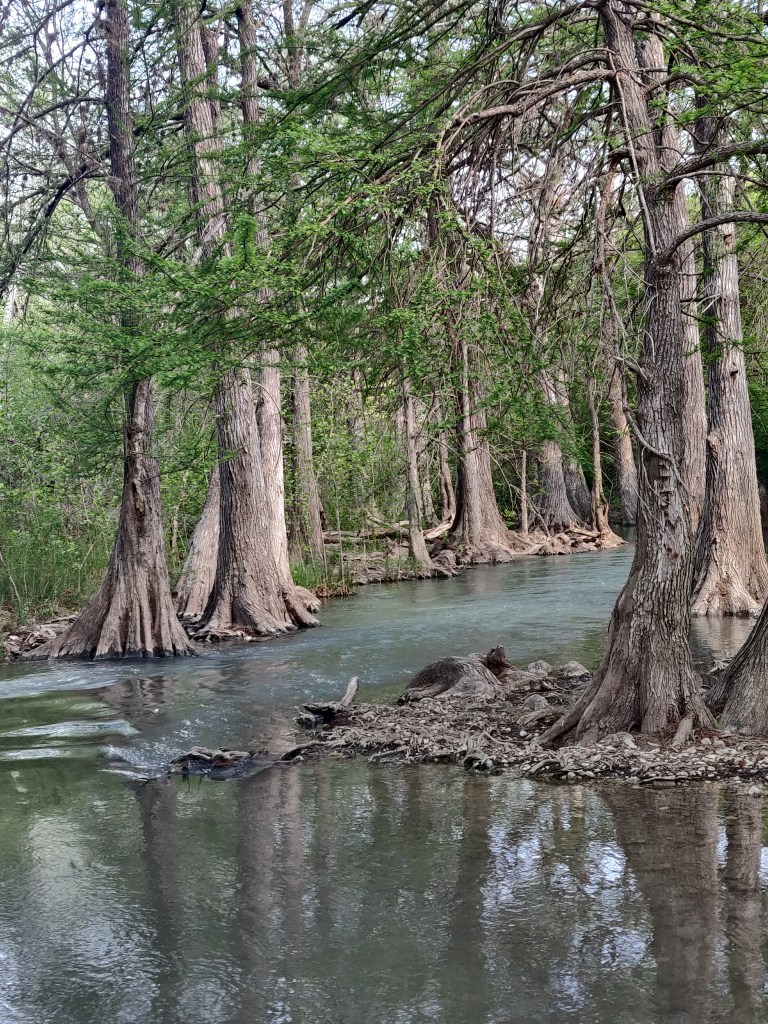
Cypress Trees along the banks of the Medina River (Spring 2022)

In March of 1991, Ron Pucek drilled a water well for a Catfish farm that could produce vast quantities of water. This Bexar County Texas well has an interesting history of its own. A few years later in 1993, the Texas Legislature created the Edwards Aquifer Authority (EAA). Right now in July of 2022, there is a drought and temperatures are pushing past 100 degrees Fahrenheit daily. Those three significant events are not what this story is about.

The history of Alsatians and water started before Texas statehood in 1845. Henri Castro brought the immigrants to San Antonio and then finally to Castroville, a long journey from Alcase. This occurred as early as 1840. The Medina river was comforting and reminded them of the Rhine from their European homeland. Flowing water surrounded by fertile land just waiting to be cleared and farmed. It was the dream they were promised.

But to achieve this dream, there was the everyday challenge of survival from heat, cold, indians, mexicans, snakes, and every last thorny bush and insect. The simple next steps for farming included water, landclearing, and all the labor to cultivate, plant, nurture and harvest. The brush for a future crop with downhill from a water source – the combinations had to be correct. Imagine how daunting it must have felt when all you have is a shovel. A single acre is huge forming a square that is 208+ feet on each side. Next time you see a college football game the field is 1.32 Acres. Imagine preparing the rows needed to plant the field in corn.

The political promise was Freedom, Land, and to most any question posed to Castro or any Texas official was, YES! Yes, please immigrate, Yes, the land is free conditionally, Yes… The reality however was immensely difficult.

The shovel, oxen, and hard work. No water pumps, no electricity, no labor sources. From a technology standpoint it would take until 1895 for Rudolf Deisel to invent the engine that would power all modern farming to this day. Rudolf was born in France in 1858. Technology would make a huge leap forward during the Industrial Revolution, but it was decades in the future from 1840. Air Conditioning was first installed by Carrier in 1902 for industrial purposes.

The odds of success were low. Survive and thrive for three years in order to homestead 160 Acres. It did come with some other requirements such as building a cabin, and farming acreage. Regardless of the obstacles and requirements, the Alsatians loved the opportunity as they came with more than a shovel and some dishes even though nothing really fundamental helpful appeared on the horizon that could help, except….

They had knowledge of springs and tributaries that would end up in the Medina. They surveyed land by-eye and by walking the low areas. Observations of large trees, green grass patches, and other signs pointed the way. Once they found promising springs they staked their homestead accordingly. Those that came early got the land next to the Medina, others had to find it elsewhere in this manner.

They were all looking for a source of surface water that could be re-routed to rows where they could grow the most basic of crops. Basic survival staples. A larger than average garden and extra grain from corn and wheat. Cotton that could be spun into useful rope and basic clothing. It was “not nothing”, it was the stepping stone technology.

These sources, or as an Alsatian would say “Die Quelle” (The Source) allowed perienneil springs to run down hand dug gravity fed ditches to irrigate their first rows of crops. This gave them a valuable season of time to make the more difficult waterworks such as a cistern or stone-lined well.

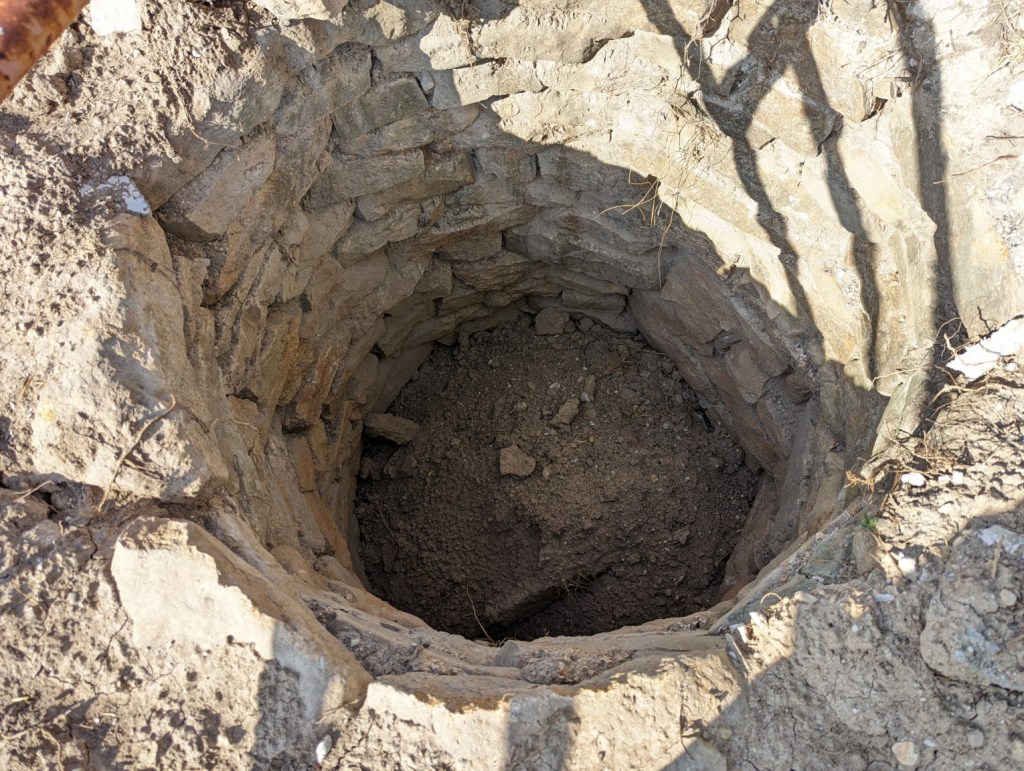
A relic 1850, stone-lined Cistern with years of fill. (Recently uncovered and to be restored July 2022)

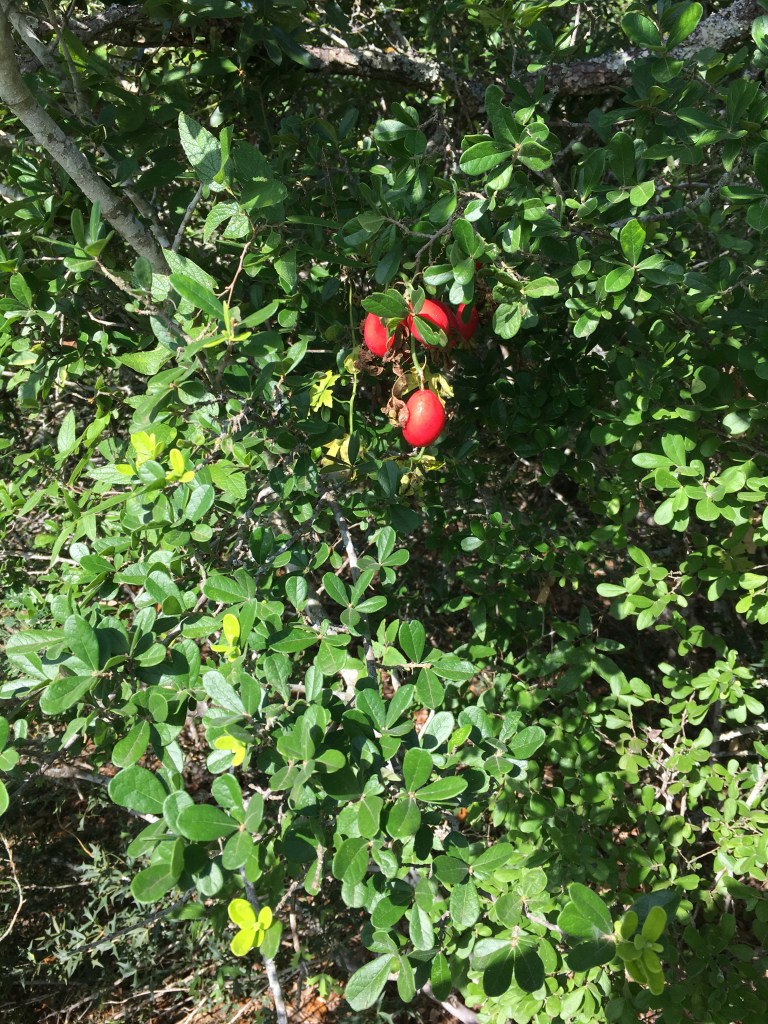
The land did have redeeming natural qualities. Native Oaks and Cypress trees for construction, Caliche and Limestone outcrops for building materials, native Ornamental Persimmons and Mustang Grapes, plus Deer and wild boar.

Texas Native Ornamental Persimmon-Spring 2017

Today’s problems are still related to water, land use, and the methods we use to obtain food and shelter. The prime mover has shifted from an individual doing hard work to governments using high tech machines of all types. Conservation, efficiency, and that next technology are all quietly in use and will be pressed hard to make the next future happen. The Alsatians settled a hostile land and their determination deserves much credit. Get back to basics, turn off the news, grow a garden instead of grass, thank your local farmer and pray for rain!